Friday, March 13, 2026

Exploring genetic selection for feed efficiency

By Argenis Rodas-Gonzalez

Editor’s note: Argenis Rodas-Gonzalez is an associate professor in the Department of Animal Science at the University of Manitoba. He can be contacted at argenis.rodasgonzalez@umanitoba.ca.
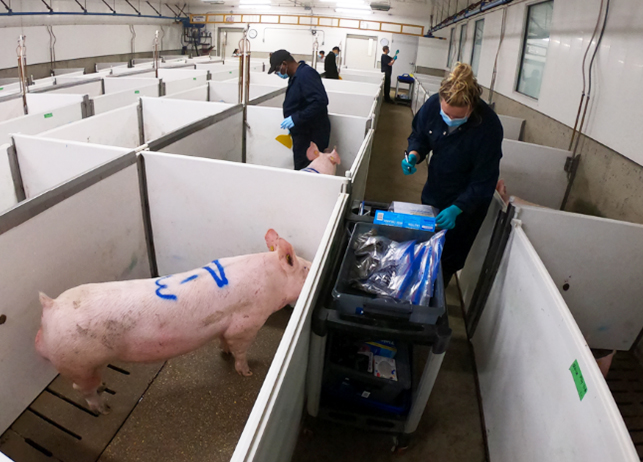
Topigs Norsvin Canada boars at a Manitoba facility being prepared for manure sampling to measure feed efficiency.

Profitable, cost-effective swine production requires healthy animals, higher performance, increased feed efficiency and making the best use of available nutrients.

Feed efficiency can be described as the biological basis of how pigs consume and metabolize feed to grow and produce an edible product. This is a complex trait based on a pig’s ability to store and use nutrients from feed, such as fats, carbohydrates, and proteins. Skeletal muscle plays a significant role in using and storing those nutrients. Most of the efforts to improve feed efficiency have been focused on formulating balanced diets through investigating nutrient composition and genetic selection for carcass leanness.

Feed efficiency can be expressed as a feed conversion ratio (FCR), which is defined as feed intake over body weight gain. A low-FCR value means animals consume less feed per unit of gained body weight, making them highly efficient; in contrast, a high-FCR value means animals consume more feed per unit of gained body weight, making them less efficient. There are other expressions of feed efficiency, such as residual feed intake and lean feed conversion, but these will depend on additional knowledge required for informed decision-making.

Feed efficiency factors vary
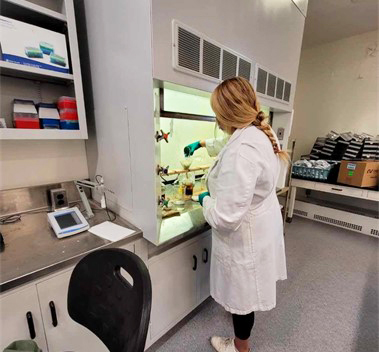
Manure samples were analyzed to determine nutrient digestibility.

A common approach to improve feed efficiency is to supply appropriate nutrient requirements for animals; however, the improvement could be limited and depends on the ingredient composition of the feed, which can vary in nutrient digestibility.

On the other hand, purebred pigs are selected for feed efficiency at the nucleus level, and genetic selection to improve feed uptake continues to be a challenge. At Topigs Norsvin, selecting genetics based on the estimated breeding values for a given feed conversion ratio (EBV-FCR) has proven to be an effective strategy to maximize feed efficiency and improve growth performance and carcass composition. However, it is not clear if nutrient digestibility in pigs could be altered by genetic selection for feed efficiency.

Studies have shown that diverse feed efficiency groups resulted in lines of pigs showing both differences in growth performance and digestibility of nutrients, which happens in the gut.

For example, in Yorkshire breeding lines fed with high-energy diets, the digestibility of dry matter, total energy, absorption of nitrogen and other nutrients like fibre are similar in both high- and low-efficiency groups, based on residual feed intake (RFI) values. But when these groups are fed with low-energy diets, the high-efficiency group has greater digestibility of dry matter, total energy, nitrogen and fibre compared to the low-efficiency group; however, low-energy diets reduce growth performance of both efficiency groups.

In contrast, other studies have reported no differences in digestibility among divergent feed efficiency pigs, despite high-efficiency pigs presenting a faster growth and leaner carcasses. Thus, based on some contradictory results, uncertainty exists with selection for feed efficiency and its effect on growth performance, nutrient digestibility and carcass characteristics, especially within Large White lines.

Overcoming the feed efficiency dilemma
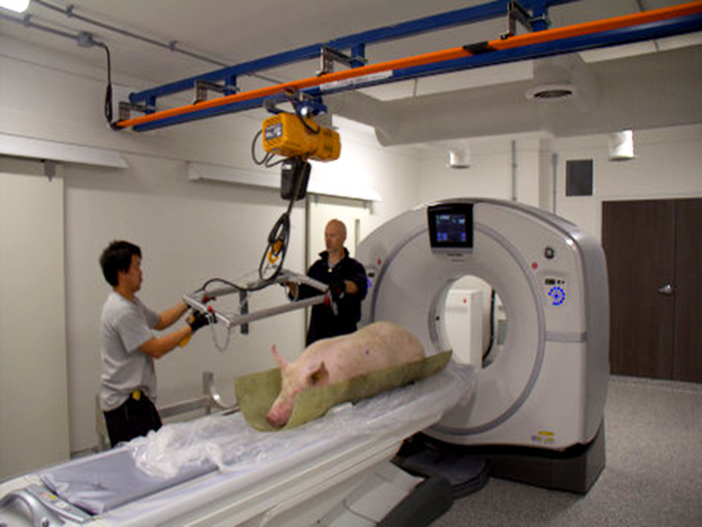
CT scanning was used to determine in-vivo carcass traits.

My team at the University of Manitoba includes researchers Ethendhar Rajendiran, Gustavo Mejicanos, Laura Beens and Ankita Saikia from the Department of Animal Science. We are working in collaboration with Topigs Norsvin Canada to respond to certain feed efficiency questions that have stumped breeders.

Our project is funded by Topigs Norsvin Canada, the Canadian Agricultural Partnership and the Ag Action Manitoba Research and Innovation program. The investigation is planning to evaluate 2,000 genotyped boars from two Large White dam and sire lines separated into low- and high-feed-efficiency groups based on EBV-FCR values within the breeding line.

This study investigates the variation in growth performance, apparent total tract nutrient digestibility (ATTD) and in-vivo carcass traits in finisher boars selected for low or high feed efficiency. Digestibility is determined by testing manure nutrient levels using an indigestible marker, while in-vivo carcass traits refer to the lean yield of the whole pig, determined using Computer Tomography (CT) scanning. Boars are selected at 23 weeks of age based on their feed efficiency value and fed a mixed corn-soybean meal-based diet using feeding stations that record individual feed intake and body weights.

Preliminary findings indicate that the sire line was heavier, with a final weight of more than 9.69 kilograms, growing more rapidly and more efficiently than the dam line, gaining more than 130.69 grams per day with a feed conversion ratio of less than 190 grams of feed consumed to gain one kilogram of body weight.

In addition, sire line presented greater loin depth, at more than 6.92 millimetres, and thinner fat depth, at less than 2.60 millimetres. However, there was no significant difference in nutrient digestibility between lines. On the other hand, regardless of the genetic line, and compared to the low-efficiency pigs, the high-efficiency pigs consumed less feed, at less than 284.97 grams per day, were more efficient, with a feed conversion ratio of less than 260 grams of feed consumed to gain one kilogram of carcass weight, had thinner fat depth at less than 3.05 millimetres, along with greater loin depth more than 6.92 millimetres compared to low-efficiency pigs.

The high-efficiency pigs were better able to digest crude protein and tended to show higher phosphorus and calcium digestibility compared to low-efficiency pigs. Based on the estimated protein deposition and the average feed intake one week before sampling, the amount of digestible lysine content met the requirements for the average pig. Nevertheless, high-efficiency pigs had a reduced feed intake, implying that they might have experienced a shortage of lysine in the diet. Thus, high-efficiency pigs offer favourable growth performance, heavier and leaner carcasses. However, it is still unclear whether the improved digestibility of crude protein was due to a lysine shortage or differences in genetic merit for feed efficiency.

Forward thinking for progressing efficiency

The University of Manitoba and Topigs Norsvin are also exploring the pig gut microbiome to identify the favorable microorganisms that contribute to feed digestibility, along with determining feed digestibility by using near infrared spectroscopy, and in-vivo leanness by CT scan. The findings may allow us to better understand the relationship between the gut microbiome, nutrient digestibility and genetics, leading to the improved and more effective selection of pigs for breeding programs.


World Pork Expo Report

Last week we attended the World Pork Expo held at the Iowa State Fairgrounds in Des Moines, Iowa. Our observations:

The World Pork Expo this year appeared to us to have more visitors than the year before. Main reason, less Covid related issues including the ability of people from other countries i.e., Canada, Mexico, South America, Europe, and parts of Asia able to travel again. We would observe less people than prior to canceled World Pork Expo’s one year for African Swine Fever fears and another year due to Covid. One other reason for less people is the show pigs are not at World Pork Expo anymore. The removal of thousands of show pigs from the premises is an obvious benefit to limiting the chance of swine disease exposure.

The attitude of producers we talked to was continuous optimism. Hog price is good but feed price is driving cost of production to levels that limit current and future profitability.

Driving through Iowa – Illinois before and after the Expo, it appears to us corn – soybeans look good, with most areas having lots of moisture and warm temperatures. Good scenario for corn-soybean development.

One producer spoke to us about a feeder pig broker saying that the number of empty finishers was because producers won’t buy pigs because of feed costs. Our reply is all pigs are in barns, none are being put in fields. If barns are empty, it means not enough pigs around to fill them. No one has barns to sit empty as a business model.

Most of any new sow barn construction discussion is being driven by Vet – Management clinics looking to manage and sell products to sow barn ownership. Very few new sow barns are being built or contemplated by other type of production models. New sow barns (farrow to wean) now at $4,000 per sow. Our observation is that the U.S. sow herd is not moving higher.

For every new sow unit there is someone exiting with the same number of sows. We also do not believe there has ever been expansion where there have been high feed prices.

To reiterate, high feed prices are hanging over the industry. This cannot be explained enough.

At World Pork Expo, Genesus announced the new World Mega ProducerTM list. There were interesting conversations, mostly centered on the huge drop of over 1 million sows of three major China World Mega ProducersTM. Producers historically don’t decrease swine production capacity when they are making money. China has been losing big money.

2022 World Mega Producer TM List 

We have discussed many times our observations that our industry has record sow and wean to finish mortality. In discussions with producers at the Expo, frustrations with this reality were evident. We believe the increase in mortality is caused by genetic companies ignoring the benefit of high appetite and structurally selection as they continue to minimize robustness. We see few other reasons for average sow mortalities almost doubling and wean to finish spiking.

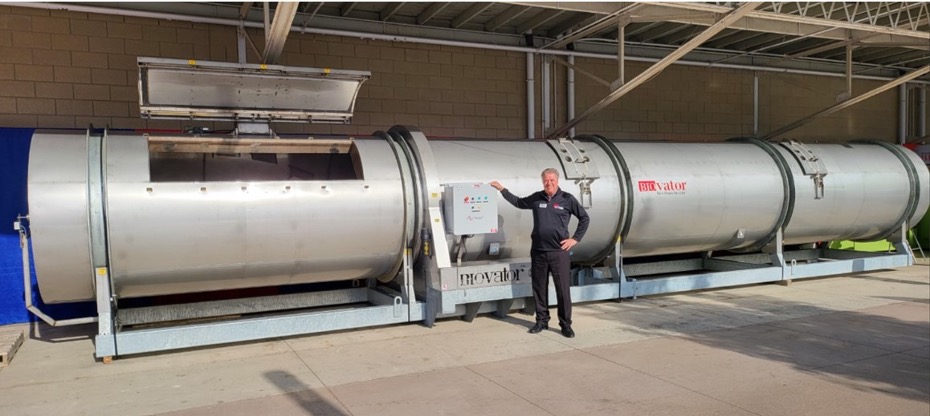
The mortality increases have created opportunities for companies to deal with deadstock. Below is a picture of the massive Biovator Pig Composter. It has been said one person’s adversity is another’s opportunity. We believe best to have pigs that live.

Talking to Packers at the Expo, they are not having a good time. It’s not hard to calculate issue. Hog Price average $1.07, Pork cut-outs $1.09 lb. The Hog Price this close to Pork Price isn’t good positive packer gross margins.

Inflation discussion was not only centered on feed costs but also on fuel costs, labor costs, and interest rates, all factors increasing costs for producers and packers. We need to have more money for our hogs and pork.

We want to thank all those that visited the Genesus exhibit and the producers that stopped to chat and enjoyed the Genesus pork sired by our Jersey Red Duroc. Also, it was nice to hear the thanks for our fight for the CFAP 1 top-up. The millions and millions of dollars promised but not delivered to a contracting swine industry is sad. The same promise re CFAP 1 top-up was made to corn producers and paid in billions. Corn got it paid, and we know what the corn price is. Hog industry contracted in production is a reflection of the economic damage from Covid. It wasn’t fair. Unfortunately, we believe NPPC didn’t fight for producers to get the promised CFAP 1 top-up to producers. That’s their job, and they failed us in our opinion and also the opinion of producers that visited us last week.

The good news is that NPPC executives had a retirement party in Des Moines last week (I wasn’t invited). They leave with a legacy of failing to fight for the millions promised by the government. The even better news is a new NPPC team is being put in place. I do not know Mr. Humphreys, the new CEO of NPPC, but I have been told he has the energy and ability to put NPPC on a path to be a fierce advocate for producers once again. Not one focused on bureaucracy sustainability. Hope spring’s eternal as hog producers. We hope for the NPPC to once again remember their job is to fight for producers each and every day.

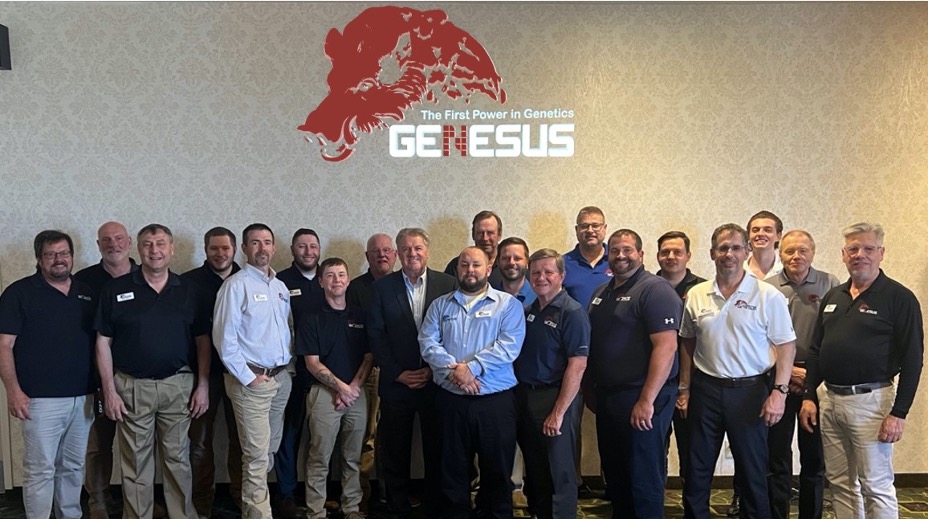
Genesus team present at the 2022 World Pork Expo
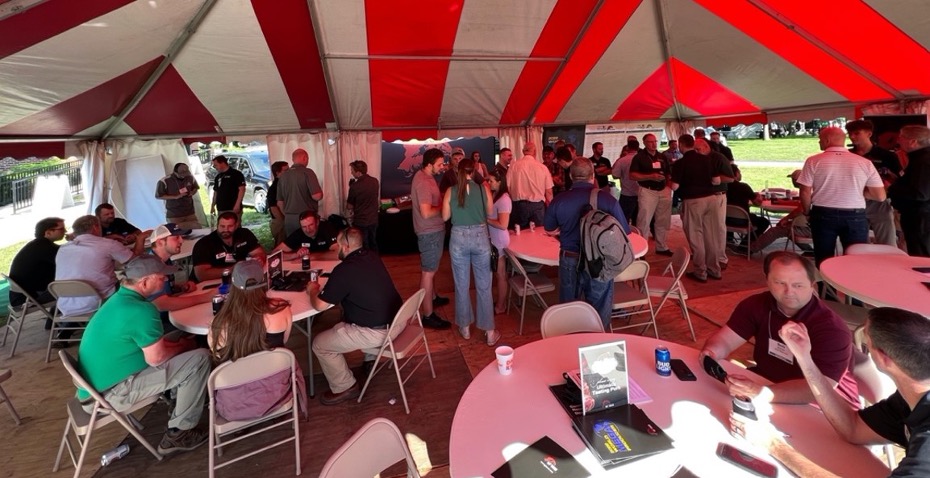
Inside the Genesus tent at the 2022 World Pork Expo

Pigs fed E. coli antibodies could lead to safer pork

By Lexie Reed

Editor’s note: Lexie Reed holds a Doctor of Veterinary Medicine from Ontario Veterinary College. She can be contacted at lexiereedvm@gmail.com.

Proper cooking of all meat, including pork, helps prevent foodborne illness. Now, scientists are finding ways to address the problem well before the consumer ever takes a bite.

Pork-associated human illnesses have drawn unfavourable media attention to the swine industry over the years. In 2018, a pork recall was issued by the Canadian Food Inspection Agency (CFIA) in response to an outbreak linked to an Alberta restaurant. The pathogen responsible for the death of one individual and more than 40 cases of illness was Escherichia coli (E. coli) O157:H7.

As few serious E. coli illnesses have been associated with pork products, there was skepticism that contamination from cattle in the abattoir was truly to blame for the outbreak. However, a 2020 study found that O157:H7 bacteria reside within the intestinal tract of pigs, and though risk of E. coli illness from pork products is low, it can have serious consequences.

Fecal contamination of hog carcasses is a serious risk factor for foodborne illness from pork. For these reasons, cooking pork thoroughly is recommended to kill any bacteria that may be present on the meat. Hygienic removal of the intestines post-slaughter, to prevent the spillage of intestinal contents onto the saleable carcass, is another important step.

But what if there was another layer to the pork safety net?

The need for E. coli antibodies

E. coli O157:H7 is known to exist in cattle, often transmitted at feedlots. But for a long time, no-one suspected pigs, too, could be affected.

A 2017 study of provincially licensed abattoirs in Alberta found that 1.8 per cent of carcasses sampled were contaminated with O157:H7, several of which were subtypes of O157:H7 that are of importance to human health. Samples were taken from abattoirs that slaughtered both pigs and cattle and from abattoirs that slaughtered pigs only. No difference in the prevalence of O157:H7 carcass contamination was observed between abattoirs that slaughtered just pigs or pigs and cattle, indicating that O157:H7 contamination of hog carcasses is a result of the pathogen occurring within the pigs themselves.

O157:H7 antibody technology was originally proposed for development in cattle, as O157:H7 contamination is predominantly associated with ruminants. However, the efficacy and safety studies in mice are more applicable to monogastric species, and thus the development in pigs was pursued. Success in monogastric studies may still lead to the development of direct-fed O157:H7 antibodies to cattle.

Developing an E. coli antibody to feed pigs

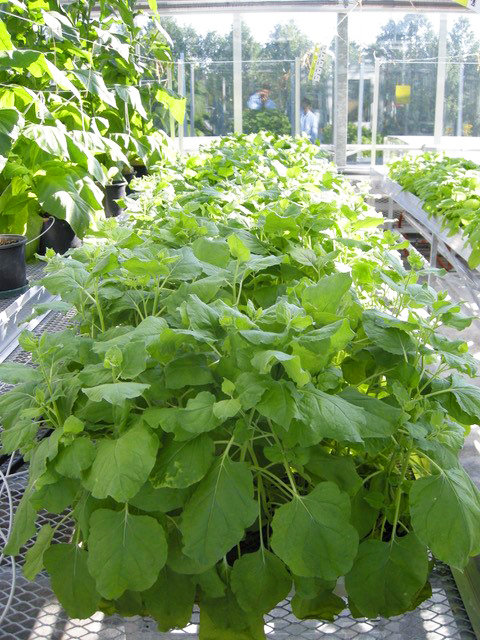
Nicotiana benthamiana, the plants in which the O157:H7 antibodies are produced, are shown here in a research greenhouse.

Agriculture and Agri-Food Canada (AAFC) research scientists have recently isolated an E. coli antibody that could neutralize O157:H7. The antibody is synthesized within the plant Nicotiana benthamiana and could be delivered as an edible feed material. Once ingested, the antibodies would bind and neutralize O157:H7 present in the gastrointestinal tract.

Rima Menassa is a genomics and biotechnology research scientist at AAFC’s London Research and Development Centre. She conducted the study that found the antibodies to be effective at neutralizing O157:H7 in cell cultures. Presently, Patti Kiser of Western University is conducting a study to determine if the direct-fed antibody can neutralize O157:H7 in mice, which would bring the technology one step closer to proof of concept in livestock.

“If feeding the antibody to mice who already have O157:H7 established in their intestines prevents shedding of the pathogen, then antibody feeding short-term prior to slaughter could be an option in pigs,” said Menassa. “If, however, the antibodies only prevent O157:H7 from colonizing the intestinal tract when it is introduced to naïve mice, then it is more likely that the antibodies would need to be fed from an early age, before significant O157:H7 exposure.”

If successful, the outcome of the study could lead to commercialization of the technology. Preventing E. coli from colonizing the gastrointestinal tract or reducing shedding of the pathogen would reduce the risk of O157:H7 contaminating the carcass at time of processing. Further, this technology could reduce the risk of contaminated manure, which may be spread on crop fields as fertilizer.

The plant used to produce the antibody, Nicotiana benthamiana, is a plant related to tobacco, native to Australia. It is commonly used for molecular biology studies and has been used to produce vaccines and other pharmaceutical products, thanks to its natural ability to express foreign gene sequences.

Although the dose regime has not yet been established, it is unlikely that the amount fed of the plant material would contribute any appreciable nutritional or fibre content. The current study in mice will explore both efficacy and safety of the plant-encapsulated antibodies. The results of this study will also help to establish a timeline for feeding pigs pre-slaughter. This study is a collaboration between AAFC and PlantForm Corp., a start-up plant biotechnology company based in Guelph, Ontario.

Direct-fed antibodies have a future

The development of oral antibody technology for E. coli may have implications for the prevention of other pork-associated infections as time goes on.

Though still in its infancy, direct-fed antibody technology is on the horizon. The commercialization of this technology for O157:H7 could expand to other significant zoonotic pathogenic bacteria in pigs, providing abattoirs with another mechanism to reduce foodborne illness from pork that starts before the pigs even reach the packing plant.

Even beyond a food safety application, this pharmaceutical delivery system could create a new avenue for vaccine and antibody delivery through feed, particularly at a time when barn labour is a significant challenge for many producers.

Whether or not an E. coli O157:H7 antibody for pigs is embraced as a method for preventing foodborne illness from pork, the development of a novel delivery method for antibodies could be a breakthrough product for the swine industry.

Study reveals more about PED in manure

By Andrew Heck

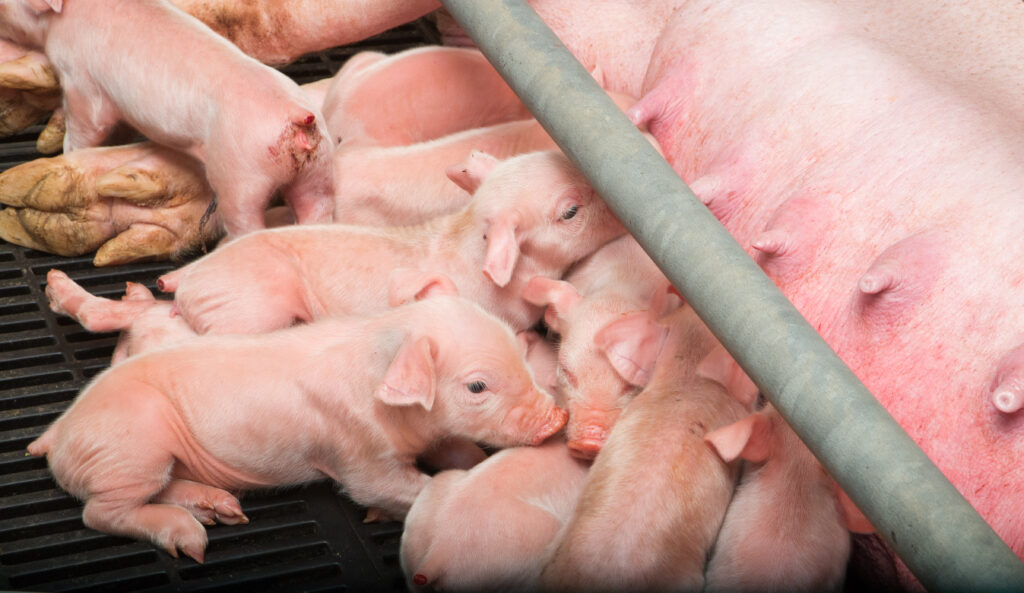
Newborn piglets are especially vulnerable to PED. The virus can be detected in manure using polymerase chain reaction (PCR) testing, but other transmission risks still exist even when manure is not the culprit for the disease.

When porcine epidemic diarrhea (PED) broke for the first time ever in Alberta, in 2019, the province’s fears of its inevitable spread were confirmed. What was not clear – as in many disease outbreak investigations – is the source of how it arrived on-farm.

“Our disease surveillance program regularly tests for PED, among other viruses of concern,” said Javier Bahamon, Quality Assurance and Production Manager, Alberta Pork. “Before the outbreaks, and since, thousands upon thousands of tests have come back negative, which is a positive sign for our industry.”

Despite surveillance, and despite a lengthy investigation, Alberta’s four PED cases from 2019 remain a minor mystery. Could it have been a contaminated feed ingredient? Poor truck washing? An unintentional lapse in biosecurity? We may never know for sure, but we do know the virus can be present in manure. Is that manure capable of causing the virus to shed in piglets?

With PED flaring up in other parts of Canada, and as farmers turn to spreading manure on their crop fields as a way to offset high fertilizer prices, this question has become important to answer. Thanks to support from Swine Innovation Porc (SIP), Results Driven Agriculture Research (RDAR) and provincial funding partners, researchers at the University of Saskatchewan’s Vaccine and Infectious Disease Organization (VIDO) – led by Qiang Liu and supported by Colette Wheler, Trina Racine and Mingmin Liao – began looking for clues last year, and their findings are now helping to better inform Canada’s PED response.

Simulating barn conditions, for testing

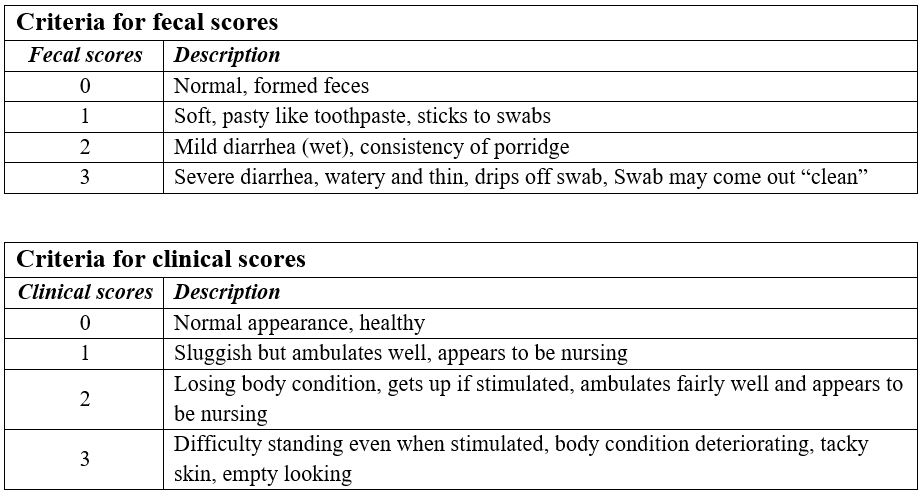
Fecal and clinical scores for the piglets involved in the trial

The concern over manure stems from the idea that piglets are highly exposed to manure in the barn, and some of that is ingested. Additionally, when it comes to applying manure to fields, equipment used in the process can be considered fomites – transmission pathways – for the virus.

To find out if it is possible for piglets to shed PED virus after ingesting contaminated manure, three groups of newborn piglets were fed highly concentrated lagoon materials containing RNA of PED virus – a simplified genetic component – which was collected from infected lagoons by representatives from Alberta Pork and Alberta Agriculture, Forestry and Rural Economic Development. For this specific case study, the lagoon materials were necessarily gathered six-and-a-half months following the initial PED outbreaks in Alberta, which may have impacted results.

Using three commercially available pregnant sows from Prairie Swine Centre in Saskatoon, piglets were farrowed and immediately brought into the study. After being fed the lagoon materials, the piglets were observed for diarrhea and mortality over the course of a week, which could potentially indicate PED infection. For a deeper dive, fecal swabs were collected for daily analysis.

Following the trial, none of the piglets showed any abnormal clinical signs, though there was mild diarrhea observed in a few piglets. Diarrhea consistency trended toward the lower end of fecal scoring – toward “soft, pasty like toothpaste, sticks to swabs” – which would not be the case in the event of PED infection, where diarrhea should be seen at the higher, more severe end.

The mild diarrhea was gone after a couple of days, and the piglets completely recovered. Body weight gains were similar among piglets having diarrhea and piglets without diarrhea, further indicating that the diarrhea was not the result of PED but some other factor. Fecal swabs failed to yield any of the virus RNA at a detectable level as well.

In this specific case study, under the conditions in which the lagoon materials were gathered, the researchers concluded that the exposure of these animals to the infected material failed to produce infectivity or clinical signs of PED in the animals themselves. Other factors, it seems, are likely responsible for Alberta’s cases of PED in 2019.

Study results are positive, with caution

While the study’s supporters are pleased to have gained further insight into PED’s lack of infectivity in manure, with consideration given to the time period in which the study took place after the initial outbreaks, the important take-home message for producers is not to rest on their laurels when it comes to proper practices.

“We are happy with what the study’s findings, as this study provides a reference when dealing with contaminated manure,” said Bahamon. “However, producers are always advised to be vigilant when it comes to using manure from their operations, since there are still so many more unknowns out there, and we do not want to give anyone a false sense of security, especially in places where PED is an active problem.”

Given the limitations of the study, it cannot be absolutely confirmed that PED virus shedding in piglets is impossible when exposed to contaminated manure. Key factors include the length of time following an outbreak and the number of outbreaks in any given geographic area. These must be taken into account when it comes to evaluating the risk of spreading the disease, and a different level of risk may be observed when dealing with certain cases when other concerns come into play.

As the industry’s understanding of PED continues to improve, mitigating risks, the threat posed by PED remains ever-present. With time and further investigation, the hope is that the industry can further adapt to the realities of this virus, for the benefit of healthy hog production.

U.S. Hog Price Creeps Higher

The U.S. hog price continues to creep higher with the Weekly National Price reaching over $1.10 lb., now higher than the same time a year ago. It was about this time last year when the price made its move to beyond $1.20. The highest net lot on last Friday’s National Daily Direct was $1.25 lb. The lowest 72¢ lb. Quite the spread.

Spain

Spain is the third-largest hog-producing country in the world. It is the major producer in the European Union. An update.

Spain’s hog price currently is 1.549 Euro/kg (75¢ lb.) touching the highest price in its history.

We understand last year Spain averaged about 1.09 million market hogs a week. Currently, Spain is averaging about 880,000. A decrease of 20% (210,000 less market hogs a week). One of the reasons for the decline is a massive PRRS outbreak from a strain called Rosalia which is very active in the major hog-producing areas of Catalonia and Aragon, areas of what can be described as wall-to-wall hog barns. Nursery-Finishing losses are in the 30-35% range with sow mortality over 20%. One major slaughter company has gone from 80,000 heads a week last December to 47,000 a week recently.

Another reason is the decline in purchases of small pigs and market hogs from other parts of Europe. High pig mortality and high feed costs increasing the cost of production is a major deterrent for importing pigs.

Spain imports 80% plus of its feed ingredients. Since September 2021 feed costs have gone from 260 Euros/ton to 450 Euros/ton, increasing cost of production to about 60 Euros a market hog ($70).

Financial losses in Spain had also cut production base with the sow herd declining as capital losses have encouraged liquidation. Some speculate even fewer hogs a week in the near future. Less Pork in Spain means less for export. This is supportive for domestic and international markets. The only way to ration limited supply is higher prices. We need only to look at grain markets to understand that reality.

Other Observations

Liquidation of Europe’s sow herd continues despite near-record hog prices, as high feed prices increase breakeven beyond current market prices. Some speculate that Germany due to ASF consequences, animal welfare, environmental regulations, generational change, and continual financial losses (high feed price) will decrease another 300,000 sows. A big decline that coupled with other liquidations will decrease the EU’s total pork production capacity down to domestic equilibrium supply-demand.

At one point Beyond Meat (Poster Boy Company for fake meat) had a share value of $234.90 per share. Last week it was $28.63 per share. A loss in market cap of $11 billion. In the last year sales of all plant-based meat have fallen in volume. We are so sad.

Next week we will unveil the World Mega Producer list for 2022. One of the companies on the list is China’s Zhengbang Group from China. Towards the end of 2021 Zhengbang Group had 1,000,000 sows. It’s a public company listed on the China Stock Exchange. Recently Zhengbang announced they now have 380,000 sows, a decline since the end of 2021 of over 620,000 sows. A huge reduction, and in our opinion, a result of the reality of massive losses per head encountered by most in China’s swine industry. Zhengbang had over $1 billion in losses.

We continue to believe that China’s hog industry has had massive sow liquidation starting last summer. China’s hog price has jumped over 20% since April 1st. In the not-too-distant future, we expect not only continued increasing China’s hog prices but China increasing pork imports to fill their inevitable pork deficit.

High feed prices are impacting global livestock and poultry production. We expect a global decrease due to the financial losses. Lots is being written about a global food shortage that could lead to not only malnutrition but social and political problems.
A quote from The Economist magazine on May 19th, “Gro Intelligence, a data firm, calculates that the calories diverted by current biofuel production and new commitments could soon be equivalent to the yearly needs of 1.9bn people. Biofuel production has increased markedly in America, Brazil and Europe as the oil price has risen; expensive crude makes the sector more profitable. Repealing biofuel mandates could lessen the damage.”

Some good news re Brazil. The country’s grain production is expected to reach 271.8 million tons from 2021/22, an increase of 6.4% over the previous year. Corn crop of 116.9 million tons up 33.4% from the year before, was significantly helped by good weather in the second-crop corn. More corn is good for the livestock industry.

Summary

Tough time for most swine producers in the world. It’s attrition to see who survives. When the dust settles, we will have the highest prices in history. If the situation in Ukraine gets tempered the price decline in world grain markets would lead to a time of good profits for surviving producers.


Road Trip Continue Ireland

Last week we continued our road trip going to Ireland. We have never been there before. Beautiful country.

Our Observations

Like the rest of Europe and the UK, Ireland producers have suffered from high feed prices relative to hog prices. Hog prices are at record levels but with the current feed prices producers still lose up to £35 ($40 U.S.) a market hog.

The sow herd is estimated to have liquidated by 10-15% with liquidation still ongoing. Similar to most countries across Europe.

Unlike England where half the sows are outside, Ireland’s production is all indoor confinement.

Much of Ireland’s pork is sent to England for consumption.

Ireland, like other countries, is seeing an increase in sow mortality attrition. It’s amazing to see sow removal rates as high as we did. It is a reason Genesus is gaining market share in these markets. Most producers realize dead sows don’t have pigs.

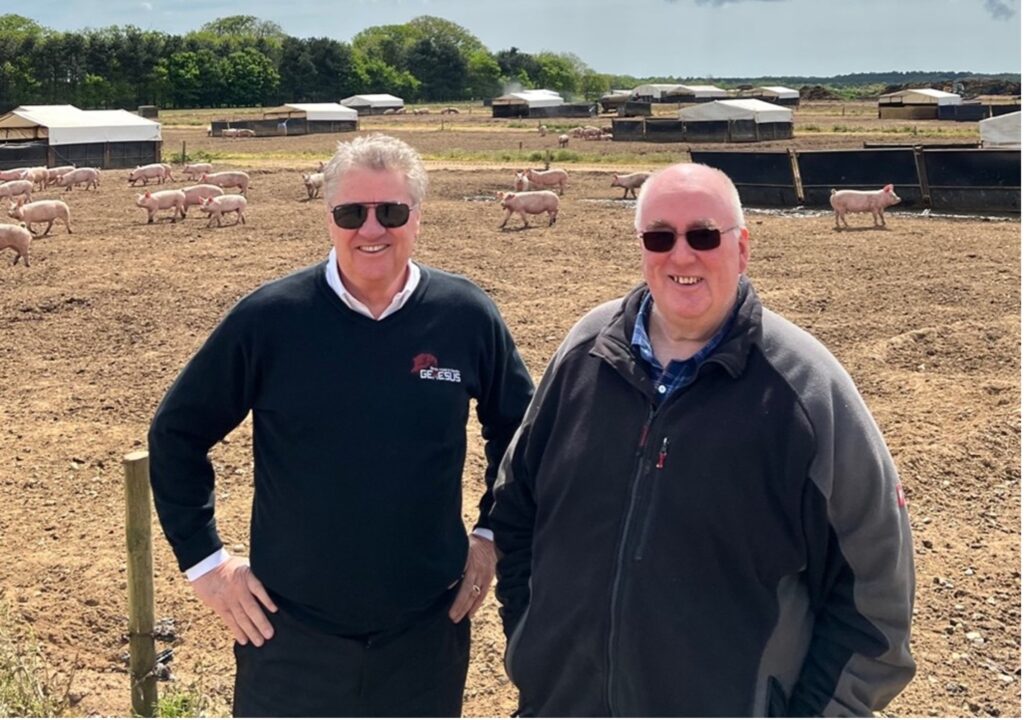
In Ireland, we visited Glenmarshal Sires owned by Trevor Shields. Genesus has worked with Glenmarshal for seven years. We have an excellent relationship with Trevor and his team. Over the seven years, our joint customers have grown from zero to a significant percentage of the market. Glenmarshal is Genesus’ exclusive supplier in Ireland and sends weekly shipments to England, Scotland, and other countries. Pigs that live and pigs that grow are a big reason for Genesus’ growth.

Producers utilizing Genesus recommended rations are benefiting from better income over feed costs. One of the biggest challenges Genesus has been convincing nutritionists that we can feed such a low-cost ton of feed. The confirmation research analysis from the world-renowned Kansas State University Nutrition team is helping us turn the tide. It only makes sense for us to recommend rations that maximize customers’ financial results.

On our trip, we visited with packers and processors. The challenge for all is the eating experience for the consumers. A heavy emphasis on low backfat has pushed packer marbling levels below 2. This type of product is not what drives consumer eating satisfaction. Genesus has 3.8 marbling, a huge difference and one that packers – retailers can get benefits to fix this taste – flavor problem.

Genesus now has more nucleus – multiplication in Great Britain than PIC. Interesting as PIC started in Great Britain and is a listed company on the London Stock Exchange. No doubt PIC is the biggest swine genetic company in the world. It dwarfs the others including Genesus. It’s been a tough year for Genus plc much like the margin in the hog industry their share value decreasing from a high of 6,310.00 to 2,684.00 shedding about $2 billion in value. We expect it can’t be much fun for Executives who have to justify the huge loss in stock value to the many different institutional shareholders. Big difference between the institutional shareholders of PIC to Genesus where we are pig farmers working to make a better pig. We know what washing farrowing room takes and we know it’s best not to have sows with prolapses.

Other Observations

U.S. Pork Exports reached the highest week of the year at 31,300 Mt. We expect to see better export numbers as Europe’s hog price has increased and supply is dropping which is helping U.S. export markets.

USDA May Quarterly Annual Product predictions came out last week. For Beef 2022 27842 million lbs., 2023 25950 million lbs. A decrease predicted of 1.9 billion lbs., less Beef in 2023. A decrease of major proportion. Around 7%. USDA predicts a small increase in pork production in 2023 from 2022 of 300 million lbs. We would be surprised right now if pork production increases. The Beef decrease would be hugely supportive to Pork prices in 2023.

June Lean Hogs got down to 97¢ recently. Recovered now to $1.10 lb., cash has held. Iowa-S. Minnesota $1.13 lb. We expect $1.20 plus.

We have written we expect China’s hog liquidation which started last July would begin to show up with less hogs coming to market in the second quarter. We believe the only indicator of the reality will be China hog prices.

China Prices in U.S. Dollars Converted from RMB
 National Market Hog Price7 kg pigs15 kg pigs
Week of April 189¢ lb.$61$65
Week of May 20$1.08 lb.$81$84

Certainly increasing so far in the second quarter. We expect as fewer and fewer hogs come to market prices will continue to increase. Price is the truth.

Summary 

Our Trip to Great Britain and meeting with Europeans at the British Pig and Poultry Fair reinforced our belief that Europe’s hog production has begun to decrease and will continue to. Increasing prices in China tell us the liquidation of sows is leading to fewer hogs. We know by all statistics there are fewer pigs in the U.S. As weeks go by the combined pig production of the Big 3 with over 75% of the world’s production in China, Europe and USA will continue to decrease. Price is the only way to ration supply. Prices will break all previous records; the challenge is the daunting price of feed.

In front of Glenmarshal Sires AI Stud. From left to right: Peter Stenka of Glenmarshal and William Healy, Glenmarshal International Manager; Paul Anderson and Simon Grey of Genesus; Trevor Shields, Owner of Glenmarshal; Glenmarshal AI Station Manager, Lynne Flynn; and Jim Long of Genesus.
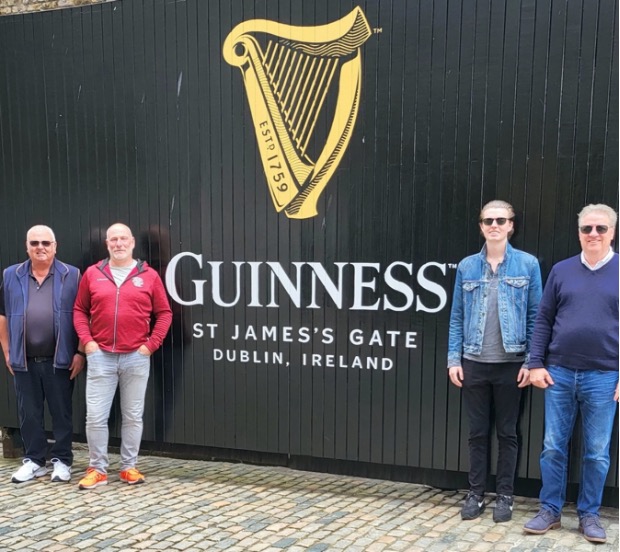
From left to right: Paul Anderson, Simon Grey, Spencer Long, and Jim Long of Genesus at the Guinness Brewery in Dublin, Ireland. Fantastic tour, still don’t like Guinness.

Virtual options benefit industry outreach

By Ontario Pork

With COVID-19 restrictions easing, producers and industry partners have been eager to see each other face-to-face, attending meetings the same way we did prior to the pandemic.

While in-person events are mostly preferred to virtual ones, the new virtual reality that has emerged since COVID-19 is also showing some benefits when it comes to creating connections between producers and between producers and consumers.

In Ontario, two prominent producers have shown great initiative in leveraging the advantages that digital spaces can provide – from sharing information with each other, to sharing information with classrooms and the general public.

Producers can now meet, no matter where

When COVID-19 interrupted the ability to meet in-person, Dave DeVries collaborated to create a new digital space for hog farmers.

In February 2021, Dave DeVries, who farms near Mapleton, just south of London, started planning a virtual meeting place for pork producers – dubbed ‘Swine Online’ – motivated by a TED Talk at the Ontario Agricultural Conference. Collaboration was key to its success, starting with the witty name.

“My wife, Lauren, gets full credit for that,” said DeVries.

Fellow producers Brett Israel and Daniel Roelands, who farm nearby, worked with DeVries on the details. Tim Blackwell, Ontario’s Chief Provincial Veterinarian, enthusiastically embraced the plan.

“We got a positive response right from the start,” said DeVries. “People definitely wanted it to continue.”

Laura Eastwood, a swine specialist with Ontario Agriculture, Food and Rural Affairs, gave them access to a secure Zoom platform with a chat option.

“Laura is our technical guru,” said DeVries. “She runs the sessions and helps with any connectivity issues.”

Blackwell acts as moderator, and Jaydee Smith maintains the online blog. Recordings are put on a password-protected website for subscribers to view at any time.

“The communication staff at Ontario Pork have also been very helpful in promoting the meetings,” said DeVries. “We have a great group of producers joining us now, some from as far away as Iowa and Saskatchewan.”

Polling questions are sent in advance to find producers who can speak to specific topics, ranging from loading area logistics, to feed costs, to the industry’s carbon footprint and environmental sustainability. Producers can showcase their operations through slides or videos, and products may be discussed, but DeVries cautioned that this is a neutral platform with no place for advertising or sales pitches. He also pointed out the advantages of online meetings.

“For one thing, you don’t have to buy doughnuts,” said DeVries. “Many producers say that they really appreciate being able to see operations all over the province, and there are no biosecurity issues in virtual visits.”

Community connections create interest

Virtual tours of John Van Engelen’s hog farm allow him to showcase the industry without compromising biosecurity.

Most pork producers are proud to show off their barns and operations, and John Van Engelen of Hog-Tied Farms Ltd., east of Sarnia, is no exception.

Van Engelen’s modern, fully wi-fi-enabled pig barn is ideal for virtual tours. He has been doing online tours for a few years, both for school groups and for other farmers.

“Last year, I was asked to do a farm tour for the Western Fair, and I guess it went well,” said Van Engelen. “Because then the Royal Winter Fair asked me to do theirs, too.”

Van Engelen’s virtual tours have become a popular way for anyone who has never seen a modern pig farm up close to understand how pork production really works. Technology is integral to the operation. His sows are fitted with radio-frequency identification (RFID) tags, which his electronic sow feeders read to ensure each pig receives its specific ration and precise amount, according to size and gestation state.

His hogs are sorted and fed different rations depending on their individual weights. He also uses RFID tags on his hogs in Pig Performance Testers to track growth and gains, to get an average meat per tonne of feed throughout the year.

Van Engelen’s farm was one of the first in Ontario to install an electricity-generating wind turbine, and he even designed a shower for the pigs to enjoy. Presenting urban students his clean, modern barn helps them feel engaged with local farmers.

“When people get to see for themselves how calm, healthy and well-treated the pigs are, it makes a much better connection,” said Van Engelen.

When he gives tours to younger schoolchildren, they mostly want to see cute piglets, but older students are much more informed and aware of the contemporary social issues with farming. They come armed with tough questions about environmental sustainability and animal welfare. Van Engelen welcomes this as an opportunity.

“Most people don’t know much about their food sources, and there are a lot of misconceptions,” said Van Engelen. “The tours are a great way to educate and inform them.”

Van Engelen estimates that, in his time on the farm, his environmental footprint has dropped by half or more. He uses his barn’s own manure as fertilizer and minimizes energy costs with heat exchangers.

“I can raise a larger pig in 50 days less than it used to take to bring one to market 40 years ago,” said Van Engelen.

The most important part of the tours, for him, is that they help make real connections between the community and the food producers they depend on.

“It’s important to correct misunderstandings about farming. This isn’t Old McDonald’s farm anymore,” said Van Engelen.

Embracing, rather than fighting, change

Swine Online and Hog-Tied Farms’ tours are great examples of how producers have demonstrated resilience through the COVID-19 pandemic. Embracing innovation and technology to share experiences will help build long-term connections across the industry.

Even as in-person meetings and events return, it is likely that virtual options, when they make sense, will become permanent in our industry and many others.

Hog Journal hits 50: a look back

By Andrew Heck

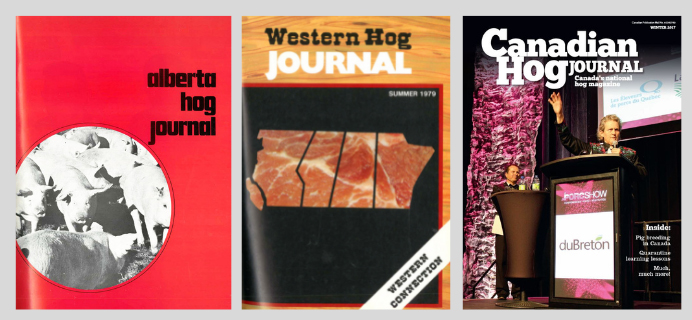
Covers of the first editions of the ‘Alberta,’ ‘Western’ and ‘Canadian’ Hog Journals, circa 1971, 1979 and 2017, respectively.

The past half-century has brought massive changes to the Canadian pork industry. Changes in politics, society and technology have re-shaped the world in significant ways since 1971, but one thing remains the same in 2022: farmers’ dedication to producing food for consumers, providing jobs for workers and bringing benefits to the economy.

This year, the Canadian Hog Journal celebrates 50 years of publishing coverage of the news, events, commentary, research and other topics that are relevant to farmers, packers, vets, genetics companies, nutrition suppliers, equipment manufacturers and so many people who make this industry what it is.

“When the Alberta Hog Journal first came out, it was my fifth year in the industry, making me one of 22,000 Alberta producers, according to the third edition that year. Three decades later, when I quit hog production, the number of producers had fallen to below 1,000,” said Roy Barrett, a retired farmer near Ponoka, Alberta – approximately 100 kilometres south of Edmonton. “Sten Berg, who was the chair of Alberta Pork at the time, stated in the first edition of the magazine, ‘We believe that primary production belongs in the hands of farmers.’ Unfortunately, hog farmers have disappeared like the bees!”

Now in our 51st year, we are constantly looking forward, but a quick trip down memory lane reveals just how closely connected – and just how far away – we are today, compared to our roots.

Editorial excellence always in focus

Transitioning from a provincial to regional to national focus is a testament to the magazine’s popularity in the Canadian pork sector.

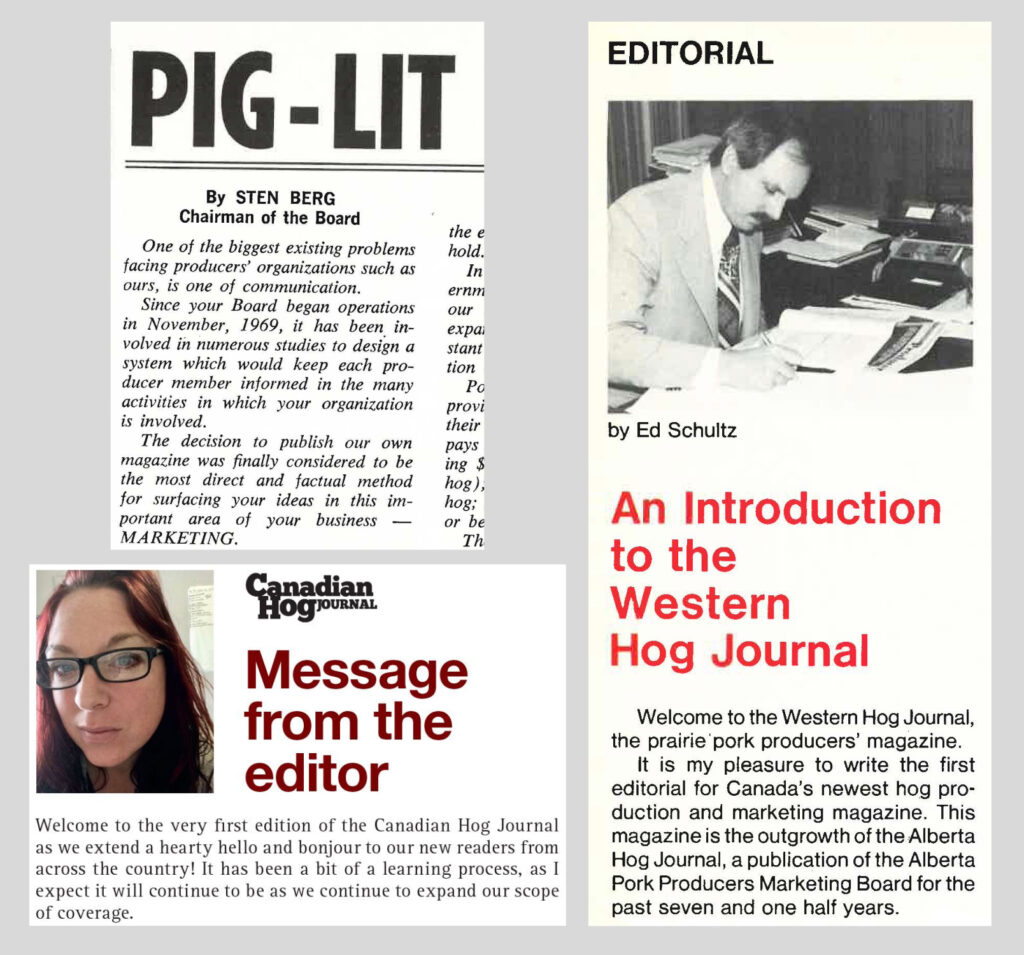
The Hog Journal was first conceived as the ‘Alberta’ Hog Journal when Ed Schultz, Alberta Pork’s former communications manager, then general manager, was hired to take the reins of an upstart publication aimed at the provincial hog industry.

Schultz was attending a meeting hosted by Bruce Jeffery, Alberta Pork’s general manager at that time, who had set his sights on expanding Canadian pork access in Japan. Schultz recalls the incident fondly.

“Bruce asked, ‘Can you write?’ And I lied and told him, ‘Yes,’” said Schultz, jokingly.

Thanks to ongoing market development efforts, the valued relationships established back then are still going strong, with Japanese buyers enthusiastic about Canadian pork to this day. The Alberta Hog Journal helped demonstrate to our foreign partners that Canadian pork was a cut above the rest, from swine research to market analysis, leading to the rapid growth of the commercial industry.

After Stirling McLeod edited the very first edition of the Alberta Hog Journal – his only edition – Schultz would take the editorial lead for the next eight years, before turning over the keys to Bill Owen, in 1979, with the re-named ‘Western’ Hog Journal. In that time, Schultz had assumed the general manager position with Alberta Pork, and the magazine duties had become too much. Now operating with the cooperation of producer organizations in B.C., Saskatchewan and Manitoba, the magazine’s popularity and reach had blossomed, further amplifying messages.

Owen would prove to be a stalwart for the next decade, carrying the Western Hog Journal all the way until 1992, when Ward Toma took over.

“The greatest strength of the Journal has always been that it offers very good technical facts,” said Toma. “It is trusted by producers and is well regarded by advertisers, at the same time.”

This framed poster, from 1996, proudly adorns a wall at the Alberta Pork office in Edmonton, celebrating the Journal’s quarter-century milestone.

Toma’s wife, Julie, actually worked with Owen on the magazine at the time the pair met. Toma served as the magazine’s editor until 1996, before joining the Western Hog Exchange (WHE), which split from Alberta Pork that same year, when single-desk selling ended in the province. Today, Toma is the general manager of Alberta Canola.

Following Toma, Jody Wacowich joined.

“For the Journal to last 50 years with all the changes that have happened in communications practice speaks volumes of the value it has for the pork industry,” said Wacowich. “This magazine is a special tool to help keep the industry connected and growing even in the most challenging times.”

Wacowich left the magazine in 2007 and is AgSafe Alberta’s executive director today. After Wacowich, the magazine was taken on by the first of two non-staff editors, Bernie Peet. Sheri Monk took over from Peet in 2013, and in 2017, a national focus was adopted for the magazine. Since being renamed the ‘Canadian’ Hog Journal, the scope of content and readers has continued to expand.

In 2019, the editorial duties were brought back in-house when I (Andrew Heck) was offered the opportunity to take on the role. Two-and-a-half years later, the magazine continues to serve the needs of the many industry stakeholders who read it, and we strive to deliver on our value proposition with every edition.

Content contributors play a crucial role

Marvin Salomons was a long-time writer of research reviews, such as this one, published in the Summer 1993 edition.

Each edition of the magazine includes a message from the editor, but what about some of the other players who operate behind the scenes for the publication to become a reality? In many cases, content contributors, designers and administrative staff have outlasted the editors to whom they have answered over the years.

When Marvin Salomons joined Alberta’s agriculture ministry as a pork specialist, in 1980, he was approached by Bill Owen and encouraged by the legendary Frank Aherne – Salomons’ graduate school advisor – to solicit research pieces for the magazine. By 1984, Salomons was writing research reviews himself. His most-recent piece, related to farm labour, was published in 2020.

“I believe the Hog Journal can be proud of where it is today. It has been a long haul with many dedicated editors, transitions and approaches to industry topics,” said Salomons. “Unlike some other magazines, and despite the rise of the internet, the Journal has survived.”

Other writers, such as Geoff Geddes, have also become prolific and regular contributors. Their bylines can be found at the top of many articles published in the past decade.

“The Hog Journal is known as a great place to find important information about the industry,” said Geddes. “With so many interesting topics to pursue, there is no shortage of things to cover.”

Not only editors and writers, but graphic designers, advertising salespeople and Alberta Pork support staff have always been unsung heroes of publishing the Journal.

Prior to the magazine’s ‘Western’ evolution, advertising sales were handled in-house by various Alberta Pork staff members. Starting in 1979, James Shaw, based in Ontario, was responsible for the advertising, until 2014. With Shaw’s departure, sales became the responsibility of Sheri Monk. Following Monk, Robert Samletzki of Calgary-based WTR Media took on the file.

“We’re grateful for advertisers’ support,” said Samletzki. “Their contributions are fundamental to keeping the magazine running, and we appreciate that.”

On the layout side, the Journal was produced by Quality Color Press in Edmonton for many years. Starting in 2010, Capital Colour in Edmonton – just around the corner from the Alberta Pork office – took over design and printing.

“For the last 12 years, we have enjoyed working with the fine people at Alberta Pork,” said Brian Todd, President, Capital Colour. “We’re looking forward to continuing our relationship for many years to come!”

Last but far from least, Marilyn Griesheimer, Office & Finance Manager, Alberta Pork, has been responsible for handling most of the financial demands that come with the magazine, since 1977. At this point, Griesheimer holds the title of the longest-serving member of the team, surpassing Ed Schultz, who retired from the magazine and his lengthy career, in 2007.

The Journal lives on, thanks to you

Social media is helping broadcast content to new, wider-reaching audiences and starting conversations online.

Fifty years from the inception of the Alberta Hog Journal, few producers today were in business at the time the magazine was first published, but many of their parents and grandparents were. Now, as many of those producers are parents and grandparents themselves, the longevity and sustainability of the family farm and the farming community at large remains at the heart of the Canadian Hog Journal. The printed magazine is still delivered to more than 2,500 mailboxes five times every year, and it is being read digitally by thousands more as time goes on and preferences change.

Through thick and thin, the Journal has withstood a test of time many magazines are never able to achieve. This legacy is the result of much hard work by everyone who has contributed to the magazine, including financially, which is all made possible thanks to the support of producers and the broader industry.

On behalf of the Canadian Hog Journal and Alberta Pork, I would like to offer my sincere thanks to all the readers, advertisers and partners within industry, government and academia who have willingly and faithfully propped up this publication throughout the years – some of which were not particularly easy. Since the beginning, this magazine has existed to encourage the collective success of the entire Canadian pork value chain. This objective has remained firmly front-and-centre for editors past and present, and it will remain in sight for the foreseeable future.

British Pig & Poultry Fair Report

Last week we attended the British Pig & Poultry Fair held in Stoneleigh Park, England. Our report:

This was the first Pig & Poultry Fair in four years due to the Covid lockdowns. Genesus was one of four Genetic companies that had booths at the fair: PIC, Danbred, Rattlerow, Genesus.

British pig producers, like most across Europe, have experienced hog prices far below breakeven for several months. Agriculture and Horticulture Development Board (AHDB) estimates losses this year have been approximately £58 British pounds per head ($70 U.S.). The market hog price last week of £171.61 kg(94¢ lb. U.S.) is actually a historically good price with the challenge of the cost of feed that pushes breakeven higher.

Britain has had many market hogs backed up which pushed weights higher. This was due mostly to lack of labor at slaughter plants due to Covid and Brexit issues. The Brexit issue relates to EU passport holders deciding to move back to EU countries. Too many had worked in slaughter plants causing a labor shortage compounded by Covid. In discussions we had it appears backlog is getting mostly cleared and hog weights are declining.

Britain, like most European countries, began serious sow herd liquidation last July. They are on the cusp of seeing fewer market hogs soon. From several discussions we had, our opinion is at least 10% of Britain’s sow herd has been liquidated with a good chance it has reached 15% liquidation. We believe this scenario of liquidation has played out across most of Europe leading to maybe a 10% EU decline approaching 1 million sows. A Hog Cycle Truth – when pig farmers lose money you end up with less hogs. Many producers in Britain told us the financial losses this hog cycle has been the worst ever.

April British slaughter numbers were 3% lower than a year ago. This would coincide with liquidation which began last July. Over the coming months, the year-over-year decrease will continue to widen.

Britain imports about 45% of its Pork needs all from the EU countries. This makes its hog price generally higher as are most hog prices in importing countries.

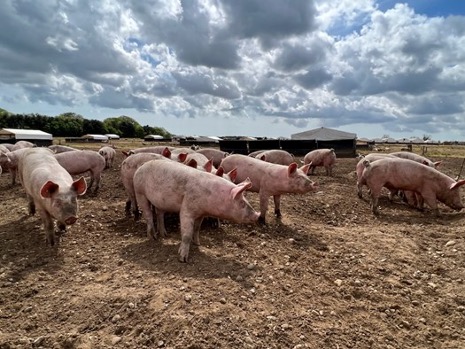
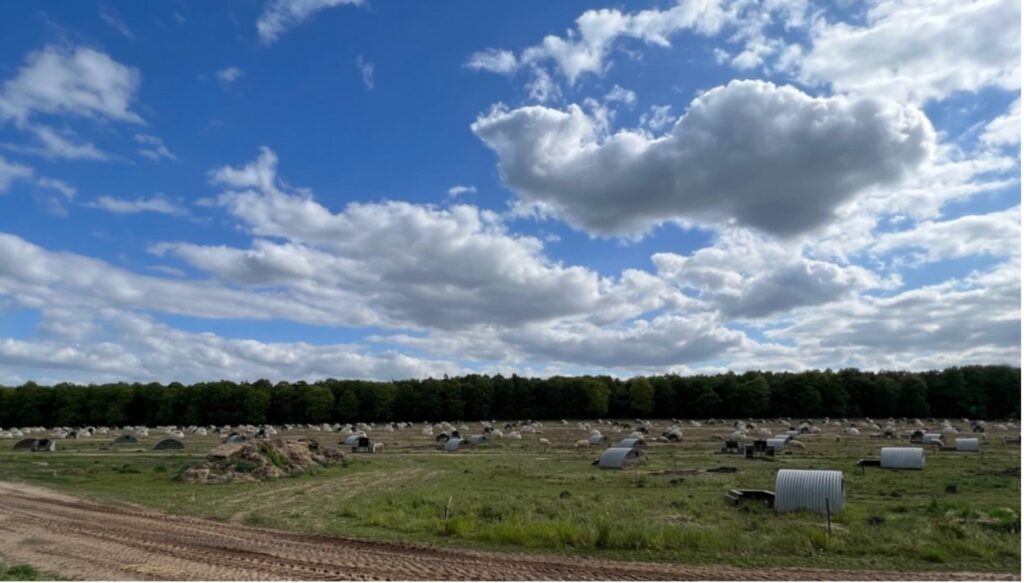
About 50% of Britain’s hog production is outdoor or free-range which makes it unique in the world. Outdoor pigs receive more money but cost of production is about 15% higher. We visited an outdoor free-range unit called Blythburgh Pork which is Jimmy Butler’s and his family, it has 2,000 Genesus sows bred to Genesus Duroc (picture below of outdoor pigs). England has areas of light soil, moderate temperatures and not too much rain that makes this possible. The three large integrators in Britain; Pilgrim’s Pride, Cranswick, and Karro Food Group have almost all their producers outdoors.

It was quite interesting for us to see the Genesus pigs in outdoor free-range production. Genesus seems to work well with good growth, lower mortality, and good productivity. Jimmy Butler and his family’s Blythburgh Free Range Pork has developed an outdoor free-range pork market using Genesus that caters to high-end restaurant The Ivy, celebrity chefs Gordon Ramsay, Heston Blumenthal, Tom Kerridge, restaurants in The Shard (the tallest building in Western Europe) and Buckingham Palace and Windsor Castle. Taste does matter.

Some industry people from France were at the Pig Fair. They estimated to us that France’s sow herd is down 10% to maybe 20%. This could be a decrease of up to 200,000 sows.

Denmark has come out with their swine statistics as of April 1. Denmark’s breeding herd is down 6% year over year. About 75,000 sows.

Synopsis

In the coming weeks, the major liquidation that began in July through most of Europe will begin to show up with even lower market hog numbers. We expect this will push hog prices higher. The challenge will be continually higher feed prices impacting profitability. One thing – less hogs means less demand for grains – soybeans. There also will be less Pork available for Europe for exports supporting other global market prices.

China

China Everbright Limited based in China estimates the China breeding herd has declined 9% from its peak. This would be over 4 million sows of decline. We believe it’s even more than that.

Producers have lost mega amounts over the last 10 months. Last week early wean pigs in China were hitting $90 U.S. (breakeven for sow producers). A reflection of the lack of supply from the liquidation. Like Europe, China’s liquidation began in July last year, the early wean price is a reflection of the lower supply.

Summary

Over the coming weeks, the global pork production in China, Europe, and North America will decline year over year. This will push hog and pork prices higher. This coming week we will be visiting Ireland, we will report on our observations next week.

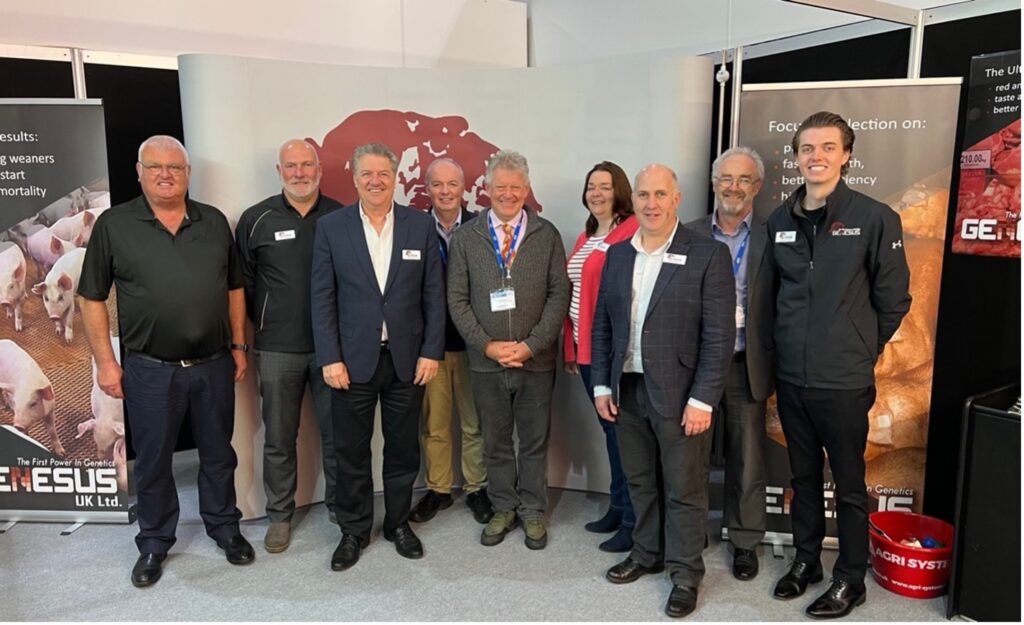
Genesus team at the British Pig & Poultry Fair
Jim Long of Genesus and Jimmy Butler of Blythburgh Free Range Pork
at an outdoor free-range unit
Outdoor free-range pigs at Blythburgh Pork
Outdoor sows in England

National Swine Congress of Mexico 

Last week we attended the National Swine Congress of Mexico held at Barceló Maya Riviera a grand resort located south of Cancún in the Riviera Maya.

This coming week we will be at the British Pig and Poultry Fair in Stoneleigh Park, Warwickshire, UK. Visit us at the Genesus booth.(Stand #64A

Other Observations

OPOROMEX the Organisation of the Mexican Pork Producers in conjunction with the Hotel-Convention staff needs to be complimented for a well-planned and executed event. The facilities were first-rate.

Spain’s pork industry was invited to attend. Several people from Spain were part of the program augmenting Mexican speakers. There were several hundred thousand sows of Spain’s production represented by individuals and companies.

We have been doing business in Mexico for 30 years. Like most of the world, we have seen the industry consolidate. There are fewer producers but those who survived are larger. Major players include but are not limited to Kowi, Kiken, Norson, Smithfield-Carrols, and Okai. There are about 1 million sows in Mexico.

Feed prices have pushed higher like the rest of the world. Mexico’s current National Average Price is 36.51 pesos/kg (81.63¢ lb. U.S. liveweight). Many producers told us this is about breakeven.

Mexico usually has a hog price of about 10¢ lb. U.S. liveweight higher than the U.S. market. This is a reflection of the fact Mexico is a net importer of pork. The major source of imported pork is the United States. Mexico is #1 volume importer of U.S. pork. Year to date Mexico has imported 232,358 tonnes, same time a year ago 193,028 tonnes (+20%). Mexico has accounted for about 45%of all pork exports year to date. Huge important market.

PRRS and PED have been and continue to be a major issue cutting production. This has contributed to the increase of U.S. pork imports.

There are several large new sow unit projects being discussed in Mexico. In some areas, environmental issues will make expansion difficult. High feed prices and higher construction – equipment costs are pushing up break evens.

Usual suspects Global Swine Genetic Companies were present at the Congress. PIC, the different Danish companies, Dutch-Norway, Genesus. The consolidation of the Genetic business has also happened in Mexico. PIC is the leading sales company in Mexico and has been for a couple of decades.

In our opinion, Mexico’s industry will grow somewhat in the future. With 130 million people the main market is domestic consumption with some limited export opportunities due to higher cost of production. Mexico’s industry benefits from being a net importer. As we look at the world, the highest hog prices are in importing countries not in exporting countries.

Mexico has historically produced very lean hogs. The realization that better tasting pork could increase consumer demand has begun to be recognized. Good news for Genesus.

A week ago, we forwarded the article celebrating the 20 years of the Jim Long Pork Commentary on Porcicultura.com. At the Congress, it was great to visit with the Porcicultura team. They are a very professional group with a passion for the pork industry. We appreciate our past and future association.

China 

Our premise has been and continues to be that the U.S, Europe, and China will have lower hog production in 2022. The first time in history that these three production centers will all be down at the same time.

How bad is China’s current market that tells us less hogs are coming? Below are the financial results of the 11 publicly traded companies in China for the first quarter of this year. Our Farmer Arithmetic, collectively they lost $2.5 billion U.S. (18 billion RMB). We estimate this group is about 1/5 to 1/6 of China’s total production. If we Farmer Arithmetic these losses to the whole industry we estimate $13 billion U.S. in the quarter. Or about $1 billion U.S. a week. One thing we believe is that when producers lose money, you get less pigs. When producers lose lots of money, you get a lot less hogs. We believe China started liquidating last July. Losses in the $70+ per head range for nine months. We expect China will see year-over-year decreases in hog numbers anytime now. Maybe the Covid lockdown could delay a hog price jump but it will delay not stop.

CompanyTotal Loss
U.S. Dollars
Loss per head
U.S. Dollars
Muyuan$828 million$60
Wens$602 million$150
New Hope$460 million$125
Zhengbang$389 million $160
DBN$37 million$43
Aonong$56 million$53
Techbank$107 million$107
TRS$23 million$54
Tecon$11 million$29
Kingsino$23 million$70
Dongrui$5 million$40
Genesus team at the National Swine Congress of Mexico
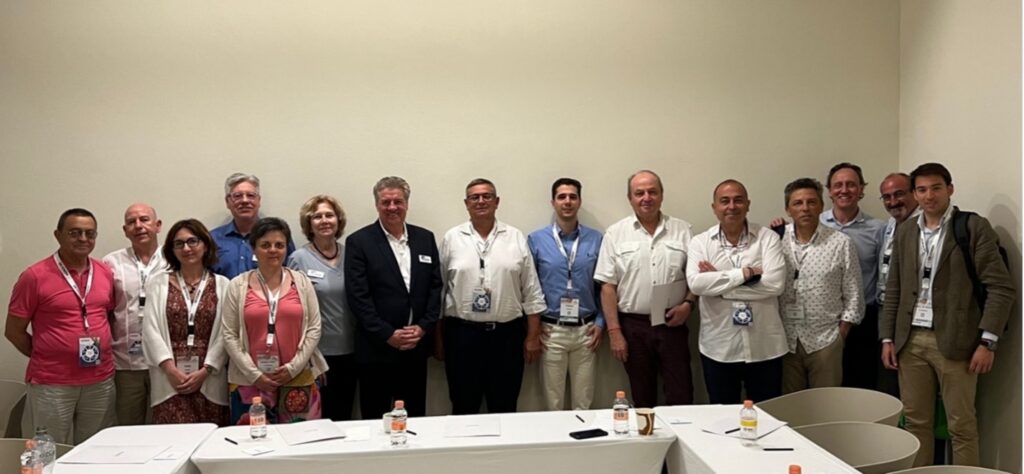
Members of the Spanish delegation present at the National Swine Congress of Mexico and Genesus team members
Jim Long being interviewed by Porcicultara.com in regards to the 20 years of the Pork Commentary being posted on their website