
By Andrew Heck
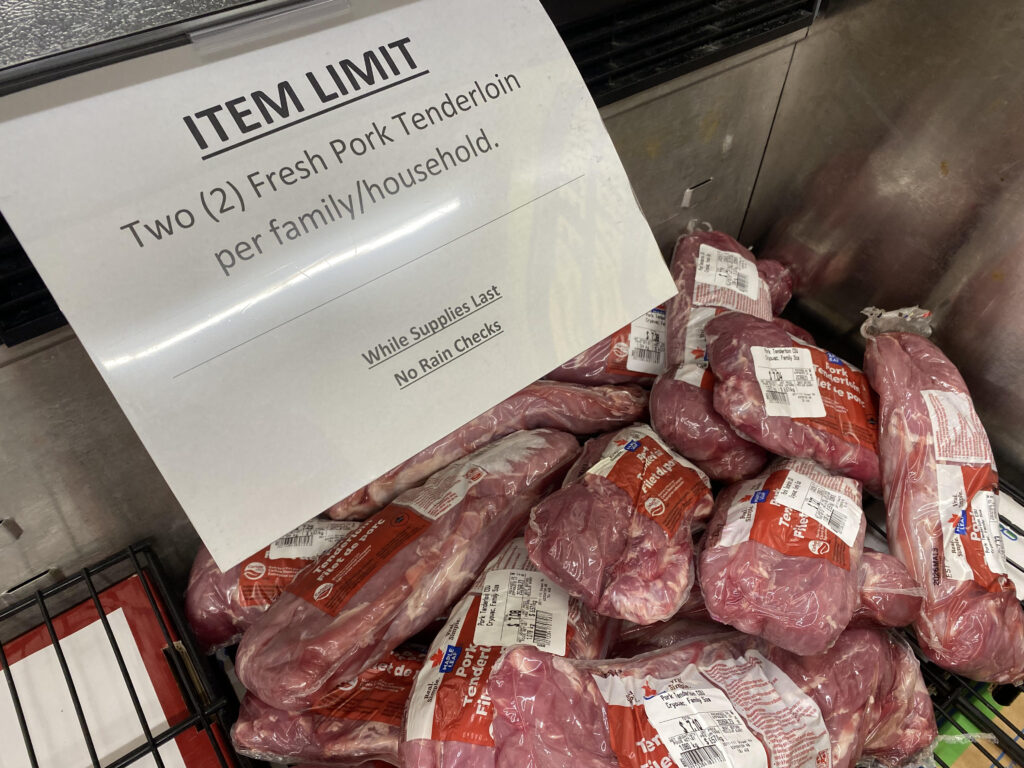
The 2010s and early-2020s were a tumultuous time for the Canadian pork industry. The political and logistical turmoil caused by H1N1, mandatory U.S. country-of-origin labelling (mCOOL), Chinese and Russian geopolitics, African Swine Fever (ASF), COVID-19 and other circumstances caused global markets to behave strangely at the best of times. In the aftermath of each situation, belts were tightened, and the industry got to work repairing itself. Consumer marketing on the national level – out of sheer necessity – took a back seat.
Fast-forward to today. Pig prices are reasonably strong, comparatively stable and forecasted to hold. For producers, processors and marketers alike, it has created breathing room and opportunity. That stability has allowed the industry to re-focus on what was neglected for years: domestic consumer marketing for Canadian and generic pork.
This renewed emphasis has required intention, coordination and consumer‑first thinking. Increasingly, value‑chain partners like the Canadian Pork Council (CPC) and Canada Pork have embraced the shift.
Consumer research exposes vulnerabilities
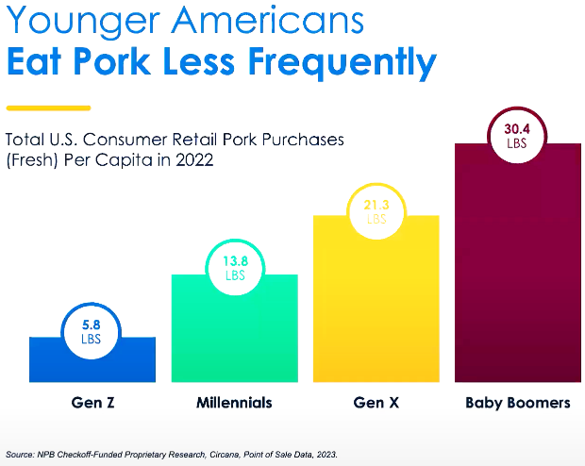
Millennials and Gen Z – those aged 10 to 45 – together represent more than 40 per cent of the Canadian population. As Millennials enter their child-raising years, and as Gen Z becomes independent as adults, marketing must meet them where they are. And it’s more urgent than ever.
Data shows that fresh pork consumption is falling with each successive generation from Baby Boomers and Gen X to Millennials and Gen Z. Alternative proteins, food delivery apps and simply less food consumption overall – driven by price inflation and the growing popularity of GLP-1 drugs – are causing marketers to think harder about how to reverse the trend and put pork back into the spotlight.
For years, other Canadian commodities have been afforded the resources to fund long-term, far-reaching campaigns. For example, since 2022, Dairy Farmers of Ontario’s ‘Milk’ has appeared on the left front chest of the Toronto Maple Leafs jersey – a lucrative sponsorship opportunity that appeals to major companies. The visibility of this campaign cannot be understated. Egg Farmers of Canada’s ‘Get Cracking’ and Canada Beef’s ‘Love Canadian Beef’ are other popular campaigns, which have even had tie-ins to restaurants, including McDonald’s.
Likewise, the U.S. National Pork Board has long understood the value of creativity and innovative approaches. ‘Pork: the Other White Meat’ was launched in 1987 and used in various formats until 2010. The slogan had so much staying power that it jumped borders and took hold in foreign markets, including Canada. More recently, in 2025, National Pork Board launched ‘Taste What Pork Can Do,’ a campaign that promises to “‘flip the script’ to prioritize consumer needs over industry features… successfully re-positioning pork for a new generation of consumers and creating long-term demand by highlighting pork’s flavour and versatility.”
While these tried-and-true concepts represent effective conventional approaches, there exists even more opportunity to pursue modern tactics. For nearly two decades, Canadian pork has failed to break into the mainstream with compelling marketing. As highlighted, a lack of resources has been the most significant problem, but thankfully, that’s changing.
PPRA supports generic marketing

Chloe Belchamber is Manager of Operations and PPRA, CPC. The PPRA, established in 2021 under the Farm Products Agencies Act, works to support and promote pork across Canada. The PPRA plays an active role in consumer education and marketing. Through its partnership with Canada Pork, the agency runs broad-reaching marketing campaigns to promote pork’s value without highlighting any specific brand.
“Rather than focusing on branded campaigns, the agency supports generic pork research and promotional efforts that benefit the entire sector,” said Belchamber. “The PPRA is intended to fuel innovation and research, support marketing efforts and lead to collaboration across sectors while facing evolving challenges with a forward-looking approach.”
The PPRA’s activities are funded through an import levy system. This levy – equal to the domestic check-off amount – is applied to all imported hogs, pork and pork products. The information used to calculate the levy comes from the Canada Border Services Agency (CBSA). This information is used by Agriculture and Agri-Food Canada (AAFC) to generate invoices, which are distributed on the PPRA’s behalf by the Canadian Beef Check-Off Agency. Levy funds are re-invested into strategic initiatives aimed at making the pork industry more competitive and sustainable.
“By complying with World Trade Organization regulations and principles of national treatment, the agency’s model ensures fairness between imported and domestic products,” said Belchamber. “A unique aspect of the PPRA’s work is that its promotional and research materials are made available to all industry players, including producers, importers and processors.”
Potential foreign animal disease outbreaks are another challenge that should not be underestimated. If African Swine Fever (ASF) or Foot-and-Mouth Disease (FMD) were to be discovered in Canada, it could devastate pork production and processing by shutting down access to export markets, triggering major backlogs of domestic pigs and pork that would ultimately need to be absorbed by Canadian consumers.
“If something like ASF were detected in Canada, domestic demand would matter a lot,” said Belchamber. “Building awareness and trust with Canadian consumers ahead of time is a form of risk management.”
Canada Pork builds Pick Pork brand

Claire Jiang is Senior Director, Consumer Marketing, Canada Pork. Since coming on board with Canada Pork, she has been instrumental in laying the groundwork for a lot of national marketing initiatives that have elevated pork’s presence. ‘Pick Pork/Choisir le Porc,’ launched in 2025, is a digital‑first, bilingual consumer campaign designed to speak directly to Millennials and Gen Z.
“These generations are digital natives,” said Jiang. “Leveraging social media trends is a new consideration that didn’t exist for previous generations.”
While traditional media like magazine advertisements and point-of-sale signage in stores continue to serve an important role for Gen X and Boomers, as the Canadian population becomes more tech-savvy and multicultural, the playing field has broadened.
“Think about the last stop of this industry: it’s consumers, on their tables,” said Jiang. “Times change, and consumers need to see the relevancy of pork.”
Pick Pork addresses consumers through several angles: taste, affordability, nutrition, versatility and convenience. Depending on the segment of the target audience, and which type of vehicle is used to deliver messaging, any combination of those angles may form the strategic basis that flourishes once a creative touch is applied.
“When other commodities were marketing heavily, we were slow to catch up,” said Jiang. “Marketing is exciting. The whole point is to be seen, and we want people to remember pork.”

Digital presence also extends to websites, like the newly launched PickPork.ca, which includes free-to-use, customizable resources for the entire Canadian pork value chain, including promotional assets like images, videos, nutrition fact sheets and consumer studies. For consumers, the site also has information on pork cuts, cooking methods, recipes and nutrition. It’s designed in a fresh-looking, mobile-friendly format and includes contemporary approaches to pork that younger consumers gravitate toward.
Recognizable Pick Pork partnerships have included advertisements in Canadian Living and Today’s Parent, a unified presence at events such as the Restaurant Canada’s RC Show and working with food influencers to expand pork’s reach on social media. By carrying this excitement forward and continuing to reinforce the campaign’s messages, Pick Pork is poised to increase consumer exposure for pork as a preferred protein.
Momentum must be maintained

Pig prices will inevitably continue to rise and fall with conditions outside of producers’ and processors’ control. With sustained attention on domestic consumer marketing, the Canadian pork industry is better equipped to withstand volatility – whether from market cycles, competition or disease risk.
A visible, relevant and trusted Canadian pork industry benefits not only producers, but everyone throughout the value chain, right down to consumers deciding what to put on the dinner table. The renaissance may have arrived later than ideal, but for Canadian pork marketing, momentum has finally returned.