Pork Commentary, February 1st, 2021 Jim Long, President-CEO, Genesus Inc.
At the end of December the USDA estimates U.S. Pork in cold storage was 408,361 (1,000 pounds) a year. A year ago it was 580,464. Down 30% and a ten year low.
In our opinion a sign of good pork demand, and bullish for the future lean hog prices.
U.S. Hog Slaughter (1,000 head) January-December
2019
2020
2019 to 2020 difference
Barrows and Gilts
125,844.3
127,149.2
+1.305
Sows
3,012
3,321
-309
Boars
354.3
311.6
-39.7
Total
129,210.7
130,781.9
The U.S. January-December 2020 numbers tell the story – more barrows and gilts and more sows to slaughter. The sow number of 3,321,000 up 309,000 year over year can be seen in the December Quarterly Hogs and Pigs Report with the 2020 breeding herd down 195,000 for the year.
December Breeding Herd (1,000 head)
Year
Herd
2017
6179
2018
6326
2019
6471
2020
6276
Some Farmer Arithmetic
The sow herd increased from Dec 1 2018 to 2019 by 145,000. The sow slaughter that year was 3.012 million sows.
In 2020 the Dec 1 breeding herd decreased year over year 195,000, with a 2020 sow slaughter of 3.321 million.
For what it’s worth analyzing the last 2 years of sow slaughter and breeding herd change we come with a sow slaughter on the 60,500 range per week average that would indicate a breeding herd staying about where it’s at. Above 60,500 it means liquidation. First 2 weeks of 2021 it has been 70,000 and 67,000.
Of note, last December-March the U.S.D.A. March 1 Hogs and Pigs Report indicated a Breeding Herd decline of 96,000 year over year. This year December was 18,000 higher sow slaughter than last year. All points to an indication of continued breeding herd liquidation.
It’s Farmer Arithmetic but it is what we figure.
The ASF Challenge
We have been doing business in Russia twelve years. Russia has been fighting ASF for over that length of time. Russia has massive land base and newer farms with good bio-security protocols. Still, they have not stopped ASF.
Recently, two large breaks – one near Moscow and other near Kursk, has led to a reported half a million pigs being killed including thousands of sows. To us this shows the challenge of stopping ASF. Russia’s structure should give it an advantage to do so.
When we compare Russia’s industry to China’s size and structure, the challenge to control ASF seems daunting. A person who works full time with China’s Swine Industry told us the other day “ASF is rampant still.” A big challenge.
When people look at China’s swine production increasing, we are not sure if the ASF equation is being factored in.
Currently in China, a commercial market hog is fetching over $600 U.S. a head. Certainly a sign of demand outstripping supply.
Other Observations
U.S. Pork Cut-outs closed Friday at 85.36₵ lb. Real strong price considering slaughter numbers of 2.658 million. Pork Cut-outs are 85.36₵ lb., Choice Beef Cut-outs $2.33 lb. Pork is a great deal cheaper relative to Beef. Maybe get better tasting Pork to compete with Beef might not be a bad idea? Why do people pay more for Beef? Taste! Doubt it’s because they want to just spend their money.
U.S. Chicken production continues to run lower than a year ago. About 1% lower egg sets, chicks placed, and slaughter. Chicken has for years had steady production increases. This slow down now means less meat available. Good for Pork price support.
U.S. cash early weans averaged $61.48 last week – 8 months ago they were $5.00. What a crazy business! All indications are there are lots of finishing spaces chasing less pigs available to fill them.
You can’t cut breeding herd and have major health breaks (PRRS) and not have fewer pigs. With sow herd liquidation continuing we expect even less supply in future. This is going to lead to even fewer market hogs.
We believe that current lean hog futures are underestimating supply-demand. We will not be surprised to see lean hogs over $1.00 a lb. this summer. With current feed prices we will all need it.
Pork Commentary, January 25th, 2021 Jim Long, President-CEO, Genesus Inc.
Summer month lean hog futures hit new contract highs last Friday at 87.20₵/lb. Significantly up from last June at 71₵ or mid-August at 74.50₵.
We remember mid-August as that was when a certain Ag-economist at NPIC projected no increase in lean hog futures because of future increased production. We disagreed vehemently at the time. The expert Ag-Economist said “CME average price for 2021 is currently 68.37₵. We believe the average price in 2021 will be 56-59₵. We recommend producers consider some hedging.” Current CME average for 2021 is 79.92₵.
Continued upside in future hog price
We expect continued upside in future hog price prospects. Less hogs coming. Why? Lower sow herd- big disease issues cutting supply.
High feed prices
High feed prices will lead to further sow herd liquidation. The latest weekly sow herd slaughter was 70,686. Any number over 60,000 is definitely liquidation.
U.S. Pork Exports
U.S. Pork Exports latest week 40,800 metric tonnes. An indication of continued strong demand.
This past week the U.S. slaughtered 2,738,000 market hogs. U.S. carcass cut-out closed Friday at $82.83. A very strong sign of demand in the face of maximum slaughter capacity. Makes us very positive of where pork cut-outs can go when hog slaughter decreases 300,000 ± head a week in the June-July- August time frame. We will not be surprised if lean hogs reach $1.00
Europe
Europe’s hog market was quite profitable until March when the pandemic hit. It got a further hit in September when Germany got ASF and lost its market in Asia. Prices have dropped significantly while feed prices have increased.
Currently; German hog producers’ losses are in the $35 U.S. per head range. Liquidation has begun. Parts of Europe have many family farms in the 150-250 sow range. It is expected there will be significant numbers of these exit for multiple reasons – profitability, labor, family inheritance or lack of, high feed prices, more environmental and animal welfare regulations.
There conceivably could be 500,000 to one million sows exit. This will cut pork availability for both domestic and export markets.
Philippines
Philippines purchased a record 4540 metric tonnes of Pork a week ago from U.S.A. Philippines has been devastated by ASF losing a large percentage of production. Market hogs are over $500 U.S. per head. The price confirms to us the lack of domestic supply. 108 million people in the Country.
Genesus Genetics are in a 2500 sow nucleus-multiplier on top of a small mountain in Luzon. It’s stayed clean. Luzon could have lost 80% of 500,000 sows. No one knows for sure but $500 plus market hogs and record export sale from U.S.A. indicate severity of ASF.
We expect Philippines will be importing a large supply of pork ongoing while they work to rebuild herd.
China
The world grain market has been pushed by the expectation of China importing even larger amounts, but since October has only had small purchases from U.S.A. We would not be surprised if China has already jumped in and bought most of their needs earlier.
Might be a communist country, but they sure understand capitalism. Corn still expensive in China at $11.08 a bushel but remember, they are used to $9-10 corn.
We read this week about continued issues with ASF in China and possible new variants related to illegal ASF vaccine use. For sure ASF hasn’t gone away.
China’s hog price is about $2.40 U.S. liveweight a lb., indicating a continued lack of supply and also to no increase in hogs being fed.
Top 20 producers in China 2020 according to report published by the Swine Communication Forum produced 78 million hogs.
Top 5 Companies
Muyuan
18.12 million
Zhengbang
9.56 million
Wens
9.55 million
New Hope
8.29 million
Twins
5.2 million
CFAP “Top-Up” Payments for Swine
~below from USDA website~
“USDA is providing an additional CFAP 1 inventory payment for swine to help producers who face continuing market disruptions from changes in U.S. meat consumption due to the pandemic. Swine with approved CFAP 1 applications will soon receive a “top up” payment of $17 per head, increasing the total CFAP 1 inventory payments to $34 per head”.
Expanded Eligibility for CFAP 2
Contract producers of swine, broilers, laying hens, chicken eggs and turkeys who suffered a drop in revenue in 2020 as compared to their 2019 revenue because of the pandemic, now are eligible for assistance. Producers could receive up to 80% of their revenue loss, subject to availability of funds.
For U.S. producers; good news. The $17 top-up could mean up to $750,000 for some. The Government assistance is a true reflection of the crisis the Swine Industry has suffered. It’s not a subsidy for pig producers but an investment by the Government to ensure a continual food supply.
Quebec City’s Rue des Remparts military installment successfully defended the settlement in 1775 against the invading American Revolutionary Army. Like those early Canadians, the Porc Show’s organizers have strategically managed challenges to modify the Porc Show in 2020, on account of COVID-19.
The seventh, annual Porc Show was presented in digital format on Nov. 25 and Dec. 3 & 9, 2020, featuring presentations, speeches and an introduction to the Quebec agri-food industry. Guests were invited to network with conference partners, including the Canadian Hog Journal, by visiting an online exhibitor area.
For the past six years, Canada’s largest pork conference has been hosted in-person at the Quebec City Convention Centre, just across from the province’s National Assembly (provincial legislature), down the road from La Citadelle and the 400-year-old Petit Champlain district – typically an attractive location for the conference’s more than 1,000 guests.
“We are very pleased with the outcome of this year’s format,” said Sébastien Lacroix, CEO, Quebec Association of Animal and Cereal Feed Industries (AQINAC), one of the Porc Show’s host organizations. “While we would have loved to welcome guests to our province, the global pandemic has prompted us to adapt, which parallels the work being done in our industry to innovate and overcome barriers to success.”
Each day of the conference was opened by Vincent Cloutier, Senior Advisor, National Bank. Special dignitaries, including Andre Lamontagne, Minister, Quebec Agriculture, Fisheries and Food (MAPAQ); David Duval, President, Éleveurs de porcs du Québec (Quebec Pork); and Marie-Claude Bibeau, Minister, Agriculture and Agri-Food Canada (AAFC) also delivered remarks.
“The pork sector has been courageous and resilient through COVID-19, soldiering on to maintain the food supply and stimulate the Canadian economy,” said Bibeau. “We must maintain solidarity with processors as they continue to operate at a reduced capacity, and we must support producers as they look for alternate solutions to sell their animals.”
Presentation topics for all three days ranged from the impacts of human and swine disease on the global pork trade, pork industry issues management and animal handling. With more than a dozen industry experts on-hand, guests were treated to a diverse and comprehensive array of subject matter.
COVID-19, ASF and global pork trade
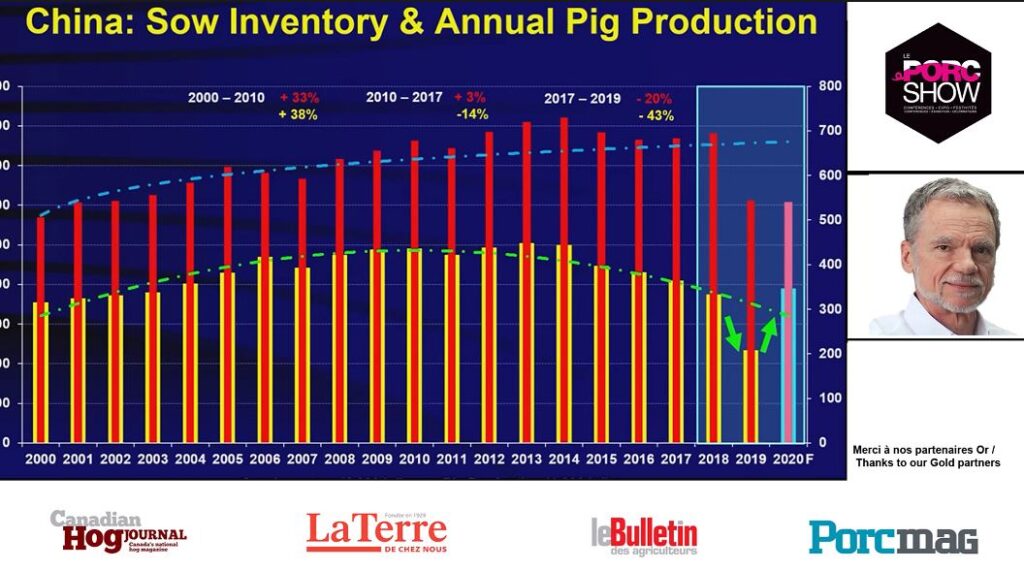
ASF hammered China’s pig herd in 2018 and 2019, but in 2020, a rapid rebound has put the country on a path to greater self-sufficiency.
In the past two and a half years, African Swine Fever (ASF) has largely shaped pork demand and sourcing, while in the past 10 months, COVID-19 has impacted the industry in more localized ways. Complications related to ASF and COVID have promoted differing industry responses, tailored to the situations faced regionally. Experts joined the Porc Show this year from Canada, the U.S., the U.K., China, Brazil, Spain and Germany – all keen to explore their national industries’ activities in response to market challenges.
Among all presenters on the topic of trade, not one failed to mention China’s impact on production and profits. For Gary Stoner, Vice Chair, C.P. Group China – a global top-three producer of pork, poultry and other commodities in southeast Asia – China’s ASF recovery has been swift, from banning human food scraps as feed to the construction of multi-storey ‘pig condominiums’ for efficient land use. The domestic price of pork for the country’s consumers varies but remains inflated, as no combination of domestic production and imports has yet been able to fill the growing demand.
In Germany, opportunities in Asia quickly vanished following the discovery of ASF in the country’s wild boar population in September 2020. Albert Hortmann-Scholten, Market Analyst, Chamber of Agriculture, Lower Saxony indicated that German pork is currently banned in 14 countries globally, as a result. Taken together with processing shutdowns related to COVID-19, pig prices in 2020 have dropped by nearly 15 per cent for German producers. In Germany, 80 per cent of all pork is processed by just 10 packers, leading the European Union (E.U.) in pork production volume and trailing only Spain in pig production volume.
In contrast to the German industry’s more recent woes, in Spain, an unusual phenomenon is taking place compared to most other pork-producing countries around the world, according to Miguel Higuera, Executive Director, Spanish National Association of Swine Producers (ANPROGAPOR): the number of farms is increasing. Starting in 2014, the Spanish government capped the size of all livestock farms, but a desire to continue expanding the industry has driven growth. Sixty-five per cent of all Spanish hog farms are integrated with processors, with the remaining 35 per cent equally split between producer cooperatives and independent operations. Spain first started exporting pork only in 1995, and in the quarter-century since then, has actually surpassed Germany when it comes to breeding pigs, exemplifying just how different the conditions are from one E.U. nation-state to the next.
Meanwhile in North America, where ASF has spared the industry so far, COVID restrictions have disrupted the supply chain. According to Steven Weiss, President, NutriQuest of Iowa, plant shutdowns encouraged curtailment of U.S. pig production in the second quarter of the year, but by the fourth quarter, production had returned to near pre-COVID levels. The production response this spring included slowing down diets and euthanizing millions of pigs – an unfortunate yet effective course of action. John Ross, President, Canadian Pork Council (CPC) pointed to a similar albeit much smaller-scale COVID response in Canada, which has included reducing breeding and, when necessary, shipping eastern Canadian hogs to western Canadian plants as a way to back-fill western demand when eastern plants were faced with interruptions.
No matter where in the world pigs and pork are found, biosecurity remains top-of-mind. Proper protocols remain important as ever – from farms and trucks to processing facilities and airports, where the potential for disease transmission is ever-present. Martin Bonneau of Demeter Veterinary Services, based in Lévis, Quebec, spoke about a new national partnership in Australia that aims to address biosecurity challenges across all livestock sectors, particularly focusing on international passenger travel and cargo shipping. The partnership is backed by a decade-long plan that is designed to buff up the country’s biosecurity significantly approaching 2030. Like Australia, the Canada Border Services Agency (CBSA) has identified flights from ASF-positive countries as having heightened risk.
Pork industry issues management
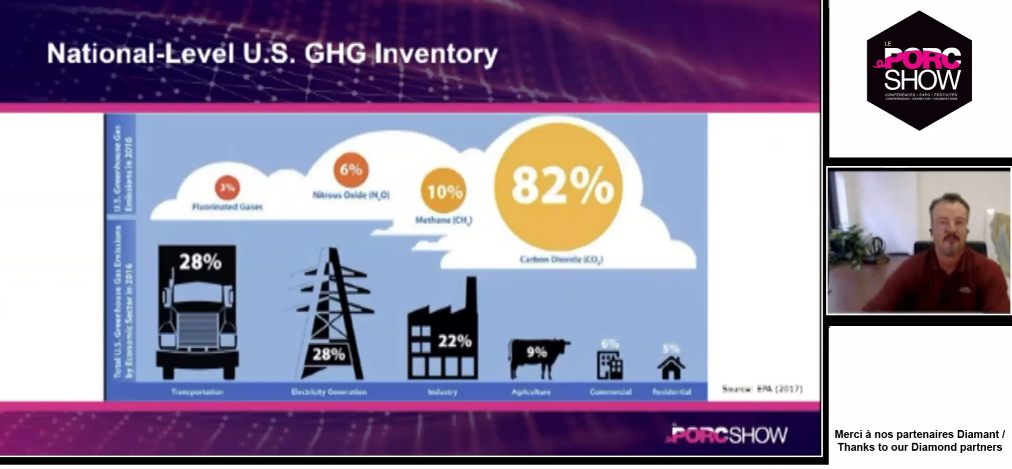
Frank Mitloehner compares greenhouse gas emission types and sources in the U.S. Agriculture altogether contributes only nine per cent of the total.
When it comes to climate change, Frank Mitloehner, Air Quality Extension Specialist, University of California believes the pork sector has many opportunities to become better by continuing to reduce methane output through manure management strategies, such as generating renewable products like biogas.
Incentivizing change and sharing knowledge, rather than punishing behaviour, is key to transforming the industry positively. While pig production has a much smaller carbon footprint compared to ruminants like cattle and sheep, feeding a growing global population means raising more livestock. Despite this, Mitloehner points out that comparing greenhouse gases directly – carbon dioxide, nitrous oxide and methane – is like comparing apples and oranges, which is where critics of animal agriculture fail when it comes to arguing the sector’s negative climate impacts.
Mitloehner also suggests that food waste, not livestock production, is the true menace that the agriculture industry as a whole needs to address, as 40 per cent of all food produced globally – or one out of every three calories – is never consumed by either humans or animals. He points out that food waste in the developing world occurs more often at the farm level, since barriers to harvesting crops and transporting commodities are more common than in North America, where much more of the waste occurs at the level of retail and home consumption.
If everyone on Earth switched from an omnivorous diet to a vegan diet, would that save the planet? Mitloehner believes that such a dramatic hypothetical change would result in an overall greenhouse gas reduction of less than one per cent. Despite that reality, vegans and animal activists continue to push this narrative.
And while Canada is no stranger to the harmful actions of animal activists, in Europe, highly organized networks have infiltrated the industry for even longer and with greater influence. Groups like L214 Ethics & Animals recruit mostly young and impressionable individuals through social media as foot soldiers for threatening pork producers and processors, while instilling fear in public figures and politicians who sympathize with the livestock industry.
According to Jacques Crolais of Brittany, France’s Meat Producers Union, the European anti-meat movement is led primarily by urban millennials who use online fundraising to support campaigns of misinformation, along with criminal trespassing and espionage.
Whether by distorting the pork sector’s impact on the environment or by targeting meat production and consumption itself, critics continue to take pot shots at the industry, which has been forced over time to cushion such reputational blows.
Animal handling, health and welfare
While the Porc Show has an undeniably business-oriented character, no pork conference would be complete without a little testimony from those who study pigs the hardest: veterinarians.
Jean Brochu, a swine vet with Sollio Agriculture, provided an overview of behavioural problems that emerge with uterine and rectal prolapses in sows. The condition often goes unaddressed without constant monitoring, and it has a mortality rate of anywhere between less than one per cent and upwards of 10 per cent. It is difficult to pinpoint commonalities between herds, as few concrete conclusions have been drawn to connect indicators from one farm to the next.
Georg Dusel, Professor of Animal Nutrition and Health, University of Applied Sciences in Bingen, Germany spoke to the role of fibre in sow management. He pointed to the fact that not all carbohydrate sources are created equal when it comes to digestible fibre, and sows at different stages of gestation and farrowing have unique dietary needs, even as it relates to using crates versus group housing.
François Cardinal with Triple V Emergency Veterinary Services of Vale, Quebec presented on the challenges and eradication strategies related to Porcine Reproductive and Respiratory Syndrome (PRRS). On an average litter of piglets, the cost of managing PRRS can be anywhere between $50 and $60. The most effective strategy, according to Cardinal, is a herd closure until negative tests come back in four consecutive litters, lasting for a period of six to nine months, at which point the herd can be carefully reopened with close attention paid to biosecurity protocols. For farrow-to-finish operations, increasing the marketed weight of hogs can also create better pig flow and optimize productivity while managing the disease.
Meeting disappointment with triumph
The scaled-down physical hub for this year’s Porc Show, where behind-the-scenes technicians were the unsung heroes of production.
Over the noon hour during the third and final day of the Porc Show, guests were treated to a culinary student competition, a tribute to Quebec’s agri-food retailers and an introduction to The Chef’s Boxmeal delivery kits with renowned Montreal-based chef Jérôme Ferrer.
After lunch, Alexandre Cusson, General Manager, Quebec Pork and Richard Davies, Executive Vice President, Sales & Marketing, Olymel took part in a brief discussion on industry issues, while Christian Bourque, Executive Vice President, Léger Marketing presented on food consumer trends.
Organizers are cautiously optimistic that next year’s event can once again be hosted in-person, but if not, the lessons learned in 2020 will be invaluable to delivering an even higher-quality experience in 2021.
While the Porc Show normally brings the world to Quebec, this year’s edition brought Quebec and Canada to the world. Extraordinary times call for extraordinary solutions, and while the virtual format is not likely the preference for most participants, it does offer certain benefits on the side of cost and accessibility. While there is no perfect substitute for the rich professional and cultural experience afforded by the Porc Show’s legendary location, the event has prevailed despite the COVID-19 crisis.
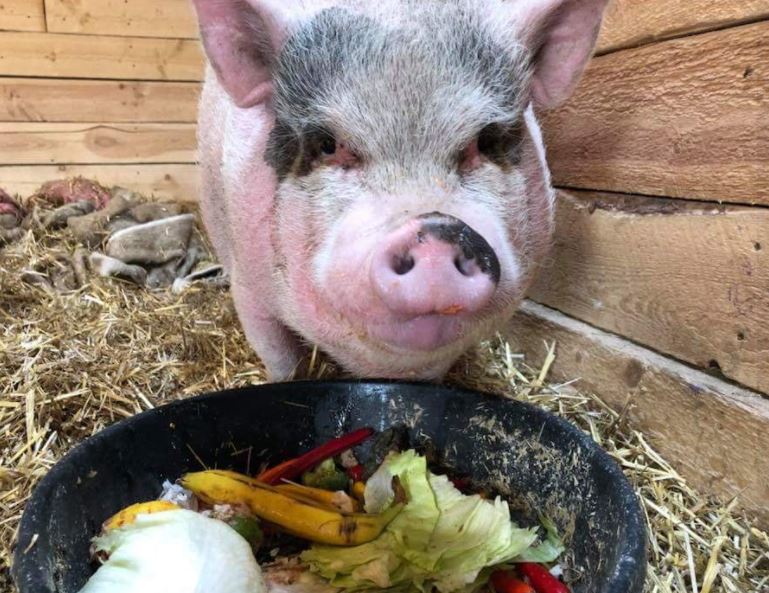
Food scraps from grocery stores, restaurants and home kitchens are sometimes fed to pigs, but it is time to stop the practice.
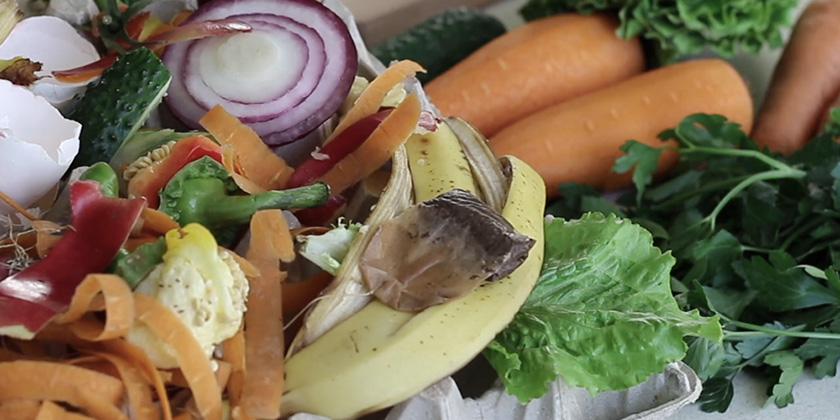
Food waste is a growing concern for social, financial and environmental reasons. The biggest wasters of food in the western world, by a wide margin, are grocery stores, restaurants and consumers. As food security, affordability and eco-consciousness are thrust into the spotlight, agri-food value chain stakeholders are looking for solutions to address the problem. One such outlet for retail food waste today is the distribution of human food scraps as livestock feed.
Across Canada, some livestock producers have been taking an interest in food redistribution initiatives by accepting packages of organic goods from grocery stores and restaurants, which includes items like fresh produce, baked goods, dairy and deli products, which may or may not include meat. Once these items are past their ‘saleable’ condition, they are sometimes loosely sorted, then bagged, boxed and sold or donated to be fed to animals, including livestock and pets.
Fido may have no problem munching on a discarded pork bone, but pigs on-farm certainly should not do the same. While food waste redistribution seems like an easy and efficient manner of disposing waste, concerns have been raised by some commercial hog producers and food safety officials who fear the potentially negative consequences of some farmers’ misguided good intentions.
Feeding scraps compromises food safety
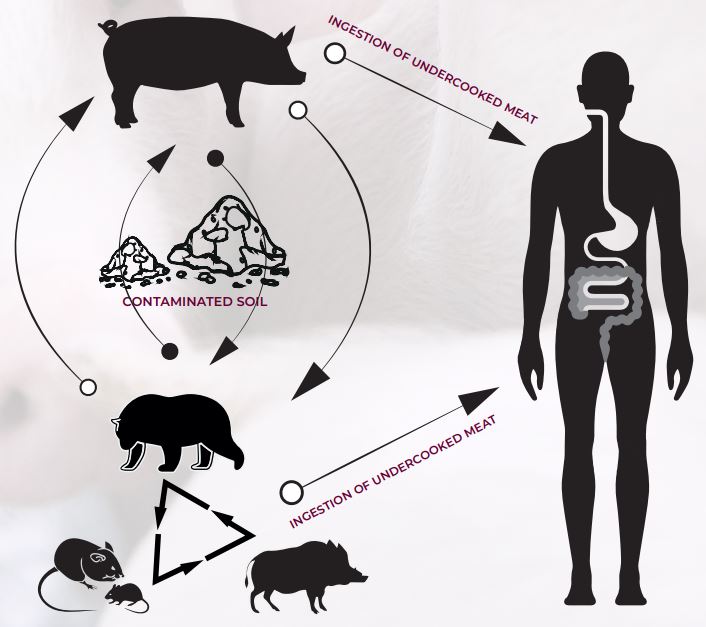
Trichinella worms can spread to domestic pigs through contaminated soil. When domestic pigs are raised outdoors, there is greater potential for cross-contamination.
For consumers, personal and family well-being is utmost. In years gone by, the industry has been faced with a dark legacy of battling Trichinosis – the parasitic disease that can infect humans, spread between mammals, including pigs, that consume animal flesh or feces hosting Trichinella worms. When undercooked Trichinella-infected meat is eaten by humans, the results can be deadly.
The commercial pork industry has been successfully free of Trichinosis for more than three decades, but some skeptical consumers still hesitate to eat pork unless it is cooked beyond all recognition – if they are comfortable eating it at all. While cooking pork past 160 degrees Fahrenheit is almost completely unnecessary for food safety reasons, even today, the parasite still does exist in some populations of wild carnivores and omnivores, like coyotes and bears. Thankfully, it has not re-emerged in the commercial industry, which produces the vast majority of meat consumed in Canada. But could feeding scraps contribute to a resurgence of Trichinosis or similar parasites and viruses?
The most recent occurrence of Trichinosis in Canadian swine occurred in January 2013 in a pig raised on a non-commercial farm. The animal was slaughtered and consumed on-farm, and no product entered the food system. However, as many non-commercial pig owners raise and feed animals outdoors, cross-contamination is possible between infected wildlife and the soil where pigs walk and eat. By placing heaps of food scraps on the ground for rooting, parasites and viruses are invited to be ingested. `
“Heat treatment is the best means of removing potential pathogens and increasing stability and shelf life of a product,” said Theresa Fritz, Communications Officer, Canadian Food Inspection Agency (CFIA). “Products that are dried are also less likely to harbour microbial contaminants.”
Trichinosis is perhaps the most foreboding and dangerous threat for consumers; however, other foodborne illnesses are also worth noting in the context of food scraps especially.
Almost routinely, we are made aware of recalls on fresh produce related to E. coli and salmonella contamination. Such recalls are a testament to the work of CFIA to keep food safe for Canadian consumers. When these contaminated products make their way into the human food chain either through home or restaurant consumption, illness often follows for those who have eaten them. Illness can also result, similarly, when animals are fed these contaminated products.
Bacteria like E. coli and salmonella are destroyed when cooked to a certain temperature. However, much fresh produce is consumed raw, and scraps used by farmers to feed animals may or may not have been cooked in advance. Certainly, waste containing items like lettuce, onions and most fruits are not cooked prior to distribution from a grocery store or restaurant, and if a farmer fails to thoroughly cook these items before to feeding them to animals, the cycle of contamination can be perpetuated.
Feeding scraps lacks animal health benefits
Feeding food scraps may result in poor pig development or disease issues.
In Canada, it is illegal to feed meat to livestock. And while many plant-based and dairy products from the human food chain, known as ‘recycled food products’ (RFPs), are legal to feed, they require regulatory clearance, and regulatory clearance alone does not mean such products benefit livestock nutritionally.
“RFP guidance was developed approximately 20 years ago in response to growing requests for these waste products to be recognized as safe feed ingredients,” said Fritz. “Companies were looking for innovative ways to divert waste from landfills and address escalating landfill costs by repurposing some products that could be useful. All ingredients to be utilized as livestock feed must undergo a pre-market assessment.”
The CFIA is responsible for regulating RFPs in Canada. RFPs that are exempt from the Feeds Act and Regulations are still subject to the Health of Animals Regulations. RFPs fed to pigs must also be registered as a feed or listed in Schedule IV or V of the Feeds Regulations. Commercially produced RFPs that meet acceptable standards are considered safe for livestock, but this is likely not the case with grocery and restaurant scraps.
When it comes to scraps that have skirted the approval process, it is possible at least some of the items included in an unsorted mixture are not allowed to be fed to livestock.
“RFPs from a restaurant or grocery store are likely to involve many more people and therefore more chance for error,” said Fritz. “Each person needs to be made aware of what the requirements are: no meat, keep it clean, don’t add in other types of waste and so on. There needs to be some awareness that these waste products are no longer ‘garbage’ but are becoming a feed ingredient that becomes part of the human food chain.”
Like human diets, proper pig diets include a balance of water, carbohydrates, fats, amino acids, minerals and vitamins. Complete feed rations should be considered in consultation with an animal nutritionist, who will most likely recommend a diet heavy on grains, pulses and oilseeds that provide an effective nutritional balance to enhance pigs’ average daily gain and overall physical well-being. Some human foods, such as pitted fruits, vegetables from the nightshade family, tree nuts and chocolate are even toxic for pigs.
By introducing ingredients like food scraps into pigs’ diets, farmers may be unknowingly weakening the health of their pigs, lowering the quality of their animals’ meat and potentially jeopardizing the commercial pork industry that is worth $24 billion annually to the Canadian economy.
For the Canadian pork industry today, perhaps the most troubling consequence of feeding scraps is the potential for spreading African Swine Fever (ASF) – a disease that has a near-complete mortality rate for pigs it infects, prompting the culling of entire herds where infected individuals are found.
In 2018, ASF spread through domestic pig herds in China almost overnight after food scraps shipped from Russia (where ASF has been known to exist for more than a decade) were fed to pigs by farmers looking for a cheap source of pig sustenance. As a result, feeding food waste to pigs is now illegal in China.
“Producers, including small-scale producers, as well as people who keep pigs as pets, are reminded that ASF could be introduced to pig herds through contaminated food waste,” said Fritz. “In the rare event that a food item is contaminated with even a trace amount of the virus, it would be harmless to humans but could still infect pigs.”
While ASF is the single-greatest disease risk to the pork industry today, the disease does not impact human health. Nevertheless, its presence could compromise long-standing international trade relationships, as recently observed with the discovery of the disease in Germany, whose pork exports are now banned in 14 countries worldwide. Canada exports 63 per cent of the pork produced from more than 20 million pigs slaughtered annually. Should Canada be faced with a similar situation, the country would immediately lose access to many global customers, spelling financial ruin.
The voluntary, producer-driven Canadian Quality Assurance (CQA) and Canadian Pork Excellence (CPE) programs provide guidelines for feeding pigs, which include the strict control and monitoring of diet, for pig health and meat quality. All commercial producers in Canada – those who sell pigs to federally inspected abattoirs, which sell their meat into grocery stores and international markets – are certified under these programs.
While commercial producers do not feed scraps, when non-commercial producers engage in the practice, it has the potential to damage the reputation of our products and could raise questions from important trade partners about the status of our industry.
Striking a balance between efficiency and safety
For producers and consumers alike, there is an ongoing desire to balance food system efficiency with food safety. While the goal is noble, we should sometimes step back and consider the implications of decisions such as feeding human food scraps to pigs.
While pigs could eat most things found in a load of scraps, it does not necessarily mean they should. The associated risks with feeding scraps often outweigh the benefits for the broader industry.
Before anyone considers feeding food scraps to pigs, CFIA recommends contacting the closest animal health office, located across the country, to ensure compliance with all federal feed and health regulations.
Pork Commentary, January 18th, 2021 Jim Long, President-CEO, Genesus Inc.
Last week there was chatter about pork demand. The bears attacked the market. When the dust settled Friday, U.S. pork cut-outs were still over 80₵. The market held – a positive sign.
We expect over the coming weeks pork cut-outs will push higher supported by steady demand domestically and internationally as hog numbers decline.
Demand
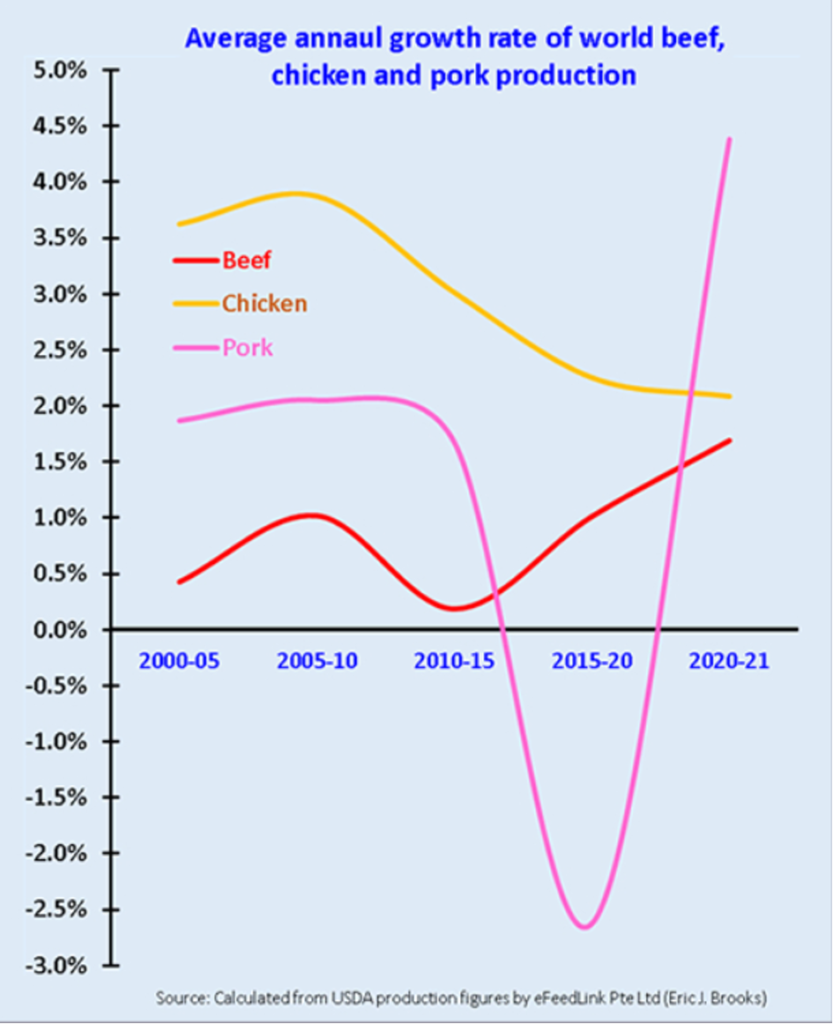
We have struggled in North America to grow pork domestic consumption. This is not the tale for the world as a whole recently. Below is a graph eFeedLink prepared using USDA data. You can see the recent jump of 4.5%. Good news; we are producing a product that global consumers demand.
U.S. Dollar to Euro
A factor in the international pork trade is the exchange rate. Currently, the U.S. Dollar is 1.21 to the Euro. In mid-March last year it was 1.07. A deviation of 13% over the time frame.
Observation: Pork meat of $1.00 lb. for an importing country in March compared to a Euro Pork Import would now be 87₵ lb.
The devaluation of the U.S. dollar is helping make U.S. pork more competitive in importing countries compared to E.U. pork. This has also contributed on top of ASF and Covid issues leading to lower hog prices in Europe.
Example: Germany March hog price 2.02 Euro kg (carcass), March U.S. dollar to Euro 1.07 to now- German Hog price 1.19 Euro Kg. (U.S. dollar to Euro 1.21).
The hog price has declined 30%. When you rely on pork exports like Europe and USA, currency rates matter as do other issues like disease and market access.
Gene Editing-GMO
Give the NPPC credit, they are consistent in their push for Gene-Editing-GMO for swine.
NPPC accuses FDA of ‘delay tactics’ on gene-edited livestock
The National Pork Producers Council is continuing its campaign in support of a proposal to transfer regulatory oversight of gene-edited livestock to USDA.
The trade group on Thursday lashed out at Food and Drug Administration Commissioner Stephen Hahn for reportedly saying he’d “refuse to sign the memorandum of understanding between the FDA and USDA addressing gene-edited livestock.”
Hahn reportedly told the U.S. Department of Health and Human Services he won’t sign onto the proposed switch of regulatory power over genetically engineered agricultural animals, currently under the purview of the FDA.
Discussions on the matter between HHS, FDA, USDA and the White House are ongoing.
First reported late Tuesday by Politico, Hahn is said to be questioning the legality and possible health ramifications of potentially relaxed oversight of some genetically altered products.
“We are disappointed that the FDA continues to engage in delay tactics that are holding back U.S. agriculture,” sated NPPC President Howard “A.V.” Roth. “FDA regulation will result in an impractical, lengthy and expensive approval process,” added Roth, a Wisconsin hog farmer.
U.S. Secretary of Agriculture Sonny Perdue in December solicited public comment on the potential transfer that would instead have USDA overseeing genetically engineered agricultural animals. The NPPC praised Perdue’s move at the time, noting it had been an advocate for the USDA regulatory oversight even as the FDA claimed jurisdiction.
The trade group contends the cost and time it takes for FDA approval of the emerging technology is prohibitive, and that China, Brazil and Canada are pulling ahead of the U.S.
We wrote last week our concerns about what Gene-Editing-GMO could possibly do to pork demand.
We had some dialogue last week with an Elected Pork Official. One question we asked – Has NPPC done survey of consumers, packers, retailers? As we quoted the McDonald Vice-president last week “Don’t expect us to explain Gene Editing-GMO”
We wonder what Packer-Retailer-Food Service Company will be interested to defend-justify Gene Editing-GMO to consumers. Their main interest is to protect their brand, and markets. To be even more cynical – why does a retailer care about PRRS resistance?
Playing defense telling parents that the product won’t harm their children, is maybe a bridge too far. You need only to look at Improvest – a legal product that is being only used slightly in our industry because; we suspect, fear of consumer backlash. It’s a top-secret usage that no one who uses trumpets to their consumers. Why? The same McDonalds executive at NPIC, called Improvest “Chemical castration” and included that in “Don’t expect us to explain.”
One other observation – if USDA couldn’t get oversight from FDA in Trump Administration, we doubt it will get easier with new Government.
Finally – we had nice conversation with Pork Official. Their prospective is from a science perspective. We appreciated that. Ours is from a marketing perspective – if you produce pork that is Gene Edited-GMO and we get push back from consumers or export markets.
Where is the win when it leads to lower hog prices? Can we afford the risk? We believe that NPPC-NPB should focus on ways to encourage not risk pork per capita consumption domestically. Taste is the first point consumers recognise. We see in pork cut-outs where Bellies-Ribs with more marbling are highest priced.
Pork Commentary, January 11th, 2021 Jim Long, President-CEO, Genesus Inc.
Holidays are over, packers got working to get hogs killed. Last week, 2,849,000. We aren’t sure but we believe the largest weekly kill in a long time. Despite this big slaughter week U.S. pork cut-outs were 81₵ lb. friday close, up from the low 70’s a couple weeks ago. For hog prices to push higher we need cut-outs to continue to move up. Current packer gross margins are at levels that encourage continual aggressive hog slaughter.
Other Observations
U.S. chicken egg sets, chicks placed, and slaughtered numbers are running slightly lower than a year ago. The chicken price is 91₵ versus 81₵ a year ago.
Feed prices have jumped significantly. Tells us don’t expect more chicken meat or feed usage anytime soon.
U.S. Cattle on feed numbers December were even with a year ago. Means no more beef or feed usage.
Less hogs re U.S.D.A. Dec 1 inventory, also smaller breeding herd. Doesn’t lead to more feed usage. Fewer hogs leads to higher hog prices.
Ethanol – good thing it is mandated. $5.00 corn and under $50 barrel oil, and less driving. All factors limiting demand of corn usage.
Our point – seems to us for corn price to stay high will need exports.
Lots of betting on China. Certainly been supportive until now. The challenge with China is no one is sure what real usage might be. There are two Swine China Inventory Reports – MOA and NBS – there are times they have a difference of 6 million sows in the same time reports – 6 million is the size of the U.S. sow herd.
Hog price in China now $2.45 U.S. lb. liveweight. Not exactly a sign of abundant pork supply or production. China corn is about $11.00 U.S. a bushel, but lots of the time China corn is $9 bushel. They are used to high corn prices.
Last week, Mexico announced they were going to ban GMO corn imports by January 2024. The U.S. exported to Mexico $2.7 billion of corn in 2019. We find this interesting as recently the NPPC was celebrating the possibility of the USDA taking over from the FDA oversight of GMO-Gene Editing, oversight and regulatory in livestock (swine) etc. Makes you wonder what part of marketing 101 NPPC missed.
The Obvious – our largest pork importer MEXICO has just banned GMO corn but are we so blind we believe GMO-Gene Edited Pork will be accepted? Doesn’t matter if technology works (i.e. paylean) when customers refuse to buy.
The NPPC is always doing calculations on what export are worth in value of hog. Take out Mexico’s imports and see where it is at. We suspect Mexico Hog producers would agree strongly to keep out GMO Pork as a non-tariff barrier to support their market. Indeed, what government could ban GMO corn and then allow GMO pork?
Our NPPC leadership and lobbying is being influenced by Big Tech Corporations that want to use GMO technology to corner a monopoly with high margins. Producers will make no more money. The cost of technology and loss of markets will take away perceived advantages. We have to ask; do the lobbyists of the NPPC work for the producers?
As the Vice President of McDonald’s said 3 years ago at the NPPC Conference in Wisconsin. We paraphrase“Don’t expect us to explain Gene Editing-GMO”.To us, nothing represents average U.S. consumers more than McDonald’s customers.
Summary
To be clear; we aren’t against technology, Genesus is a technology company. Indeed a global technology company. What we are against is using technology that could destroy pork demand. All our money is invested in the pork business. When we speak it is because of a vested interest in our industry.
Lobbyists, pick up a paycheck. They don’t have an interest in the business. If this lobbyist job doesn’t work out they get another one. There are lots of opportunities for lobbyists in Washington. Washington is a long way from any farm. This distance can distort what is important to the people who pay the bills.
Over the last twenty-plus years, U.S. per capita consumption has flatlined. We have failed to grow our domestic market. Indeed we lost market share as total meat consumption increased. Chasing GMO technology as the solution is dangerous. Mexico’s ban on GMO corn could lead to ban on GMO pork (U.S. largest pork export market).
What happens if one major player like Walmart, McDonald’s, etc. says they won’t use GMO-Gene Edited pork? How fast would all the others fall over themselves proclaiming the same? We should stop going down this foolish path of GMO-Gene Edited Pork before it’s too late.
Demand drives price – can we afford to take the risk?
Pork Commentary, January 4th, 2021 Jim Long, President-CEO, Genesus Inc.
2020 was one of the most challenging if not the most challenging ever in the U.S. hog industry. The slowdown and closing of slaughter plants in the early parts of the pandemic collapsed hog prices.
We are now moving into 2021. Our industry needs a recovery to profitability. What are some of the factors that we see affecting our life in 2021?
Covid vaccines are here.
Now depending on the ability of governments’ timeliness to get people vaccinated at some point Covid issues will get minimized. U.S. packing plant employees have been deemed one of the first groups to get vaccinated. Sooner rather than later would be a good idea.
In Canada it appears Quebec slaughter plants employees need vaccinated as soon as possible. Their problems are backing up hogs and pushing feeder pigs and slaughter hogs to U.S. that normally wouldn’t go there.
Feed prices have jumped significantly over the last two months.
Seems a little strange if USDA December Global supply levels of corn-soybeans led USDA to project 2021 U.S. corn $4.00 bushel and soybeans 10.55 bushel, why the market has blown past these numbers. One thing for sure the current grain prices will encourage huge acreage increases globally in 2021.
Chinas hog production – the wild card in hog prices
One of the wild cards in hog prices and feed prices is Chinas hog production. Last week Chinas hog prices surged to 35.40 rmb/kg. ($2.41 U.S. liveweight lb.). This was up from under 30 a few weeks ago.
There is much speculation on where Chinas hog supply is at as they rebuild after ASF. We believe price is the true reflection of supply and demand. $2.41 U.S. liveweight lb. tells us China is still very short of hogs.
The Pig Feed Price in China last week was 3.4 rmb/kg. or $468 U.S. ton. Expensive and despite high hog price will slow down expansion. If you use 700 lbs of feed to raise a pig, it’s $164 U.S. of feed cost of production per head.
Europe Hog Market 2021
Europe really benefited in 2019 and early 2020 with political issues between U.S. and China. Hog prices were very strong. Since March when Covid struck and then ASF in Germany in September, prices have dropped significantly mostly created by Germany’s ban from China and other Asian markets.
Germanys market in March when Covid struck was 2.02 Euros/kg. – Sept 2, just prior to ASF it was 1.47 Euros/kg. – last week dealing with the effects of ASF bans 1.19 Euros/kg. A drop from March of about 80 Euros a hog (almost $100 U.S. dollars).
A similar decrease can be seen throughout Europe hitting producers hard while at same time feed prices are increasing. We expect to see significant liquidation in Europe’s breeding herd over the coming few months.
U.S. pork exports have increased
Since the ban of pork from Germany to China, Japan and South Korea in September, it appears to us that U.S. pork exports have increased by at least 5,000 tonnes a week. We expect this trend to continue in 2021 as the ban on Germany continues. This is price supportive for U.S. producers in 2021.
The Canary in the Coal Mine
We like to use the term Canary in the Coal Mine to describe what U.S. cash feeder pig prices mean to what’s coming. From the first part of April until the end of August 40-50 lb. cash feeder pigs were under $20 per head. The longest time on record of such low prices and a disaster for feeder pig producers. The price under $20 was a true reflection of supply-demand- and industry attitude.
Last week U.S. Cash feeder pigs average was $68 with some expecting soon it will reach $80. What a turn of events. Obviously, something is going on, no one pays more than they have to.
Fewer Hogs
We believe the sow herd liquidation, significant PRRS and PED have cut supply even more than you expect seasonally. Lots of empty pig spaces are chasing fewer pigs. Results – price goes up. In our opinion even though lean hog futures have pushed back up, they are still undervalued relative to what’s coming. Fewer hogs year over year and higher prices.
The latest weekly sow slaughter of 69,699 is in our opinion, a sign of continued liquidation. If correct we will see continued lower hog numbers in the coming months.
2021
We don’t know what hell looks like but maybe we got a glimpse in 2020. We try to keep in perspective such as “well I am not living in Syria.”
The challenges we all faced were real. It took perseverance and determination to push forward. So as we stand at the beginning of 2021 we are optimistic. We see lots aligned re supply-demand that should push the industry to a profitable year.
Let’s also believe the hog cycle is alive and well and things get balanced out.
Have a good 2021! “Life can only be understood backwards, but it must be lived forwards” ~Soren Kierkegaard~
The Winter 2021 edition of the Canadian Hog Journal is here!
Last year, with the latest Winter edition hot off the press, I was headed to the Banff Pork Seminar, eager to share the magazine with guests. This year, I will have to settle for sharing the PDF virtually and changing my laptop computer background to an alpine scene. Not quite the same, but it will have to do. And I can still have my pint of beer at home while listening to Irish jig music, right?
The issue of delayed Canadian Pork Excellence (CPE) program implementation persists, and this edition features the third article on the subject in as many years. Consider that a ‘hat trick,’ if you will, as we wait on the next NHL season to start.
Feeding human food scraps to pigs is an age-old practice for some small-scale producers, but is it an effective or safe solution to eliminating food waste? While pig production volume heavily favours the commercial industry, it takes only one disease slip-up to potentially shake the entire sector to its core and jeopardize consumer confidence, which disproportionately affects commercial producers.
Manitoba Pork’s long-time general manager, Andrew Dickson, is retiring. Likewise, long-time communications coordinator, Sandy Ellis, has also left the organization. Her replacement, Joey Dearborn, has written a thoughtful career-in-review piece about Dickson, included here.
As with visiting Banff, I was looking forward to travelling to Quebec City again this year to attend the Porc Show, but that too will have to wait. While the conference was unavailable in-person, the organizers did a nice job of hosting the event over Zoom, as you will see from the coverage.
This edition also includes many interesting news pieces, along with expert commentary on the growth of grocery e-commerce, in addition to a look at the last decade of Swine Innovation Porc (SIP), as well as research on water consumption under stress and the benefits of feeding trace performance minerals, along with a callout for producers to support an environmental footprint study.
Heading into 2021, the past year of mostly negative developments in the Canadian pork industry should, hopefully, help us see the potential positives going forward. I remain grateful to continue advocating for this sector, as I anticipate the birth of my second child — another daughter. The older one is not quite three-years-old, but she already has her mother’s smarts and good looks, along with her father’s way with words and habit of asking too many questions – a dangerous but exciting combination.
Whatever this year holds for us all, you may like to buckle up, grit your teeth and hold on! I will be doing likewise. Our saving grace? If industry players and publications continue promoting the right kind of content to influence decisions that benefit our sector, our odds of collective success might be better than we even know. Let me know what you think by emailing andrew.heck@albertapork.com. I want to share your views in the next ‘Letters to the editor’ section. Diverse perspectives equal higher-quality, thought-provoking conversations, which is what we should all being aiming for.
Letters to the editor
In reply to ‘Price negotiating power balance hurts producers’ (Fall 2020)
“During Alberta Pork’s recent annual general meeting (AGM), I put forth a resolution requesting producer support for the Alberta Pork board of directors to explore new hog marketing options, including the potential for a system like single desk selling, using Quebec’s marketing arrangement as a possible example. Producers voted to approve the resolution.
“The whole idea is to get more negotiating power, and I believe that is a necessary step to take. If we leave it up to producers to pursue voluntarily, it is much less likely to work. If we look at formalizing such a system, it may be more binding and successful.
“The reason I think Alberta Pork should be the producers’ marketing representative under this kind of system is practical: for the concept to work, legislation will need to be modified, which requires partners that are recognized by government. I have confidence that the Alberta Pork board of directors includes the right people and motives to represent producers in this regard.
“It is not every day we have an opportunity to inspire real change within our industry. I really hope all producers take this seriously and truly hold themselves accountable and help push things in the right direction.” – Nathan Stahl, Stettler, Alberta
In reply to the cover of the Canadian Hog Journal (Fall 2020)
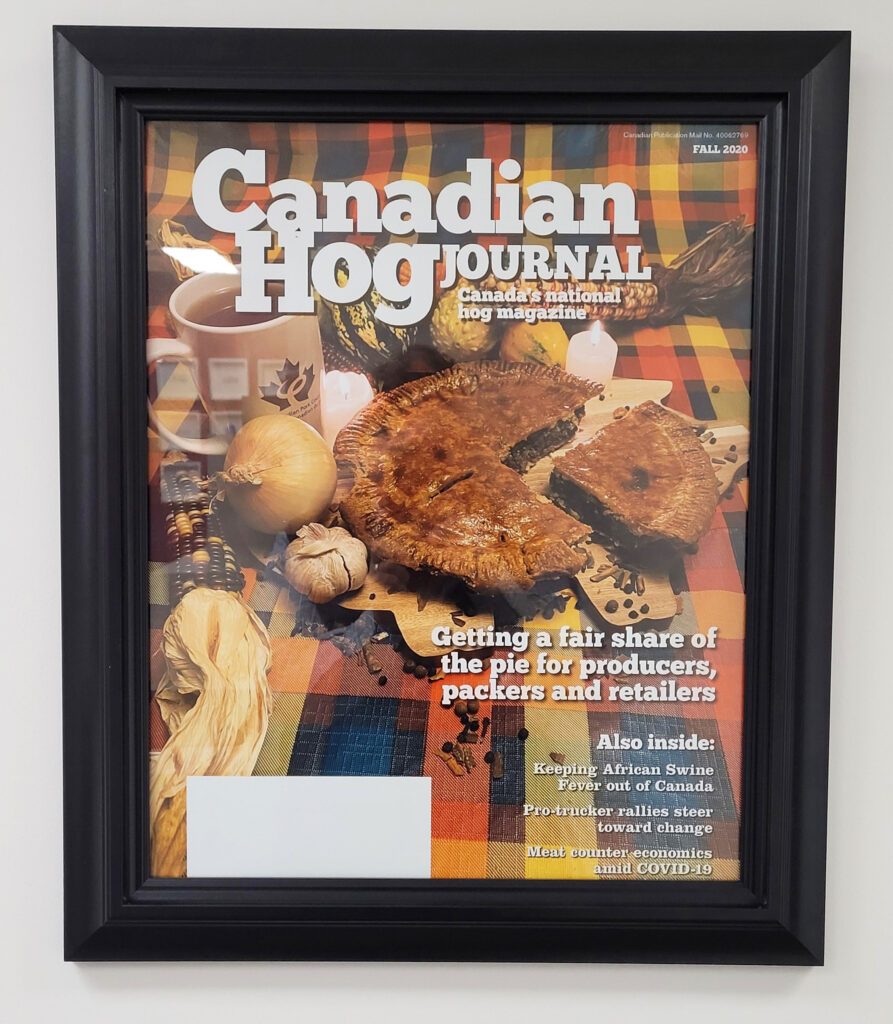
The cover image used on the Fall 2020 edition of the Canadian Hog Journal has received some positive attention from readers, including the Canadian Pork Council (CPC), which has framed and hanged the cover at the organization’s office in Ottawa.
The image itself was staged and captured in the kitchen of editor Andrew Heck, featuring a homemade Canadian pork and beef tourtière, along with a CPC-branded ceramic mug and other fall-themed decorations.
The cover and total magazine layout are the responsibility of Michael Poulin, a graphic designer with Capital Colour of Edmonton, the company that prints and distributes the magazine.
Editor’s note: Joey Dearborn is the communications coordinator for Manitoba Pork. He can be contacted at jdearborn@manitobapork.com.
After 16 years at the helm of Manitoba Pork as the organization’s general manager, Andrew Dickson has decided to move on. Dickson’s journey in agriculture began nearly half a century ago and has shaped the Canadian pork industry in many positive ways.
Agriculture flows through Dickson’s blood
Dickson delivered an address at his first annual general meeting (AGM) with Manitoba Pork, in 2005.
Andrew Dickson’s journey to Manitoba from England – with his agriculture degree from the University of Reading in hand – started in 1974 with a ‘help wanted’ ad soliciting farm workers to come to the province as part of the Manitoba Farm Labour Pool. Dickson set aside his goal of becoming a manager for a British bank in favour of a seasonal job on a large dairy farm near Dauphin and a notional plan to eventually move to Australia or South Africa.
“Late that fall, through the Farm Labour Pool manager, I met the regional director from Manitoba Agriculture at the time, who told me that he had two positions open for agriculture representatives – one in Ste. Rose and one in Russell,” said Dickson. “I asked the farmer, who had relatives in England, and he said that he would go to Russell, because there were more English people there!”
After a short trip back to England and a visit to the High Commissioner’s office in London to get his immigration papers, where he was advised to “buy a pair of sunglasses to avoid snow blindness and keep [his] T4 slips,” Dickson made the permanent move to Canada. From his first posting in Russell, he transferred to Stonewall, in 1977, as an agriculture representative. In 1981, he changed roles, becoming the province’s chief of the 4-H and Youth Programs, moving again, in 1983, to Arborg as the regional director for the Interlake region, and finally to Beausejour, in 1991, with responsibility for the Interlake-Eastern region.
“I spent almost 30 years in agricultural extension, but we also had to deal with floods in the Red River Valley, with prairie fires in Ashern, flooding around Arborg and Fisher Branch, and droughts across the regions,” said Dickson. “The 1980s were a hard time in agriculture in Manitoba in terms of crops. People were losing a lot of money. We organized suicide workshops at one point. It was a big adjustment period, because there was a lot of new technology, in terms of machinery, new crops and farm chemicals. In the 1990s, there was a massive expansion in the pork business with hundreds of new barns built on a scale never seen before. I was very involved in the development of the regulations dealing with local planning and environmental protection.”
As the industry evolves, so does the organization
Dickson (right) joined Rick Bergmann, Chair, Canadian Pork Council (CPC) in Washington, D.C., in 2013, to advocate for the Canadian pork sector.
Joining Manitoba Pork in 2005, Dickson has been at the forefront of many new programs and services when it comes to food safety and disease management, labour shortages, financial challenges and resolving sometimes-thorny political issues in Manitoba related to new barn developments and ending the moratorium on expansion, in addition to dealing with the fallout of trade issues in North America and around the world.
“I came to Manitoba Pork at a time when the organization had changed from being a single-desk marketing agency into an industry sector organization,” said Dickson. “The job was to represent the organization and put in programs and services that would benefit the industry as a whole.
“The board of directors asked me to move the emphasis from the public and industry relations side toward the producer services and business development side, because they wanted to be more involved in supporting hog production on-farm.”
Global trade is an issue that has remained top-of-mind throughout Dickson’s tenure. In the year before he took over the general manager role, the U.S. moved to enact a countervailing duty on Canadian hog imports. Canada won the subsequent trade case and was able to move forward with continued exports to a strong trading partner.
“When I arrived, we were still in the middle of a trade case with the U.S., and that April, we got the results that we won the case,” said Dickson. “One of our first objectives was to repair relationships with our U.S. counterparts, especially in Iowa and Minnesota, because we shipped a lot of iso-weans and feeder pigs there. We initiated a new program to get down there and be visible, getting to know the Americans and their issues with us. We’ve come a long way, and it’s now part of our regular activities.”
Dickson noted that the importance of the U.S. market cannot be overstated, and that his successor needs to keep trade relationships as a top priority, as “you cannot make assumptions when it comes to building these relationships.”
Dickson instrumental in navigating industry issues
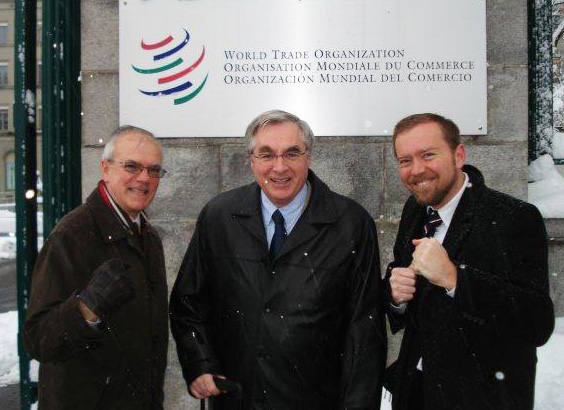
Dickson (middle) brought the country-of-origin labelling fight all the way to Europe, in 2015.
Following Canada’s successful trade challenge, the U.S. moved to enact mandatory country-of-origin labelling (mCOOL). After eight years of appeals to the World Trade Organization (WTO), Canada won the case in May 2015, and the U.S. Congress scrapped the mCOOL policy soon after. It took numerous trips to Geneva, Switzerland and Washington, D.C. not only to support the Government of Canada’s efforts to overturn mCOOL, but also to encourage U.S. politicians to change the legislation. The support of the U.S. pork industry was crucial to ultimate success.
Dickson also suggested that it is crucial to work together with producers and organizations across western Canada, because of how interlinked the industry is. He cautioned that provinces cannot go it alone when it comes to a strategy for building a stronger sector.
“For example, the federal and provincial governments have been very good over the last couple decades in terms of supporting the industry in accessing foreign labour. We are a high-turnover industry, so we have to replace labour, and our country is short on labour all the time.”
Dickson also sees labour as having a great benefit to many rural communities across the province, not just in Winnipeg. He noted that many communities want new hog operations and often approach Manitoba Pork for assistance because of the diversity new workers bring to their small towns.
A major issue close to home was the decision by the Government of Manitoba to enact a hog moratorium on new expansions and barns across the province, around the same time as Manitoba Pork was working to establish a new processing facility in Winnipeg.
“Our relationship with the government of the day was deteriorating rapidly,” said Dickson. “The board of directors wanted to push back against the moratorium, and they wanted to tell the government that this is very bad for rural Manitoba – it’s very bad for our industry, it’s bad for the province and there’s no science behind this. We decided to call the government out on it.”
In 2006, as part of a Clean Environment Commission review, barn expansions were paused. In 2008, the government introduced Bill 17, which effectively banned barns in all or parts of 35 municipalities. In 2011, the provincial government went further, essentially banning new hog barns across the province under the guise of protecting Lake Winnipeg.
“It’s hard to imagine that we had producers picketing on the front steps of the Legislature,” said Dickson. “It was unheard of in Manitoba – senior businessmen picketing like that.”
Dickson makes his mark on the future
Dickson (right) spoke with U.S. counterparts at the Iowa Pork Congress, in 2019, reinforcing the cross-border relationship.
After the 2016 Manitoba provincial election, the new provincial government ended the hog barn moratorium and enacted new changes to municipal planning, leaving municipalities in charge of many of the governing regulations.
“The new government brought in new rules about how barns would get approved in the province, continuing to protect the environment but dropping the moratorium.”
Going forward, Dickson indicated that bringing new producers into hog farming is paramount, and that there is a real opportunity in having crop producers invest in the industry and use manure to offset the use of synthetic fertilizers.
In terms of Dickson’s advice to his successor, it boils down to the team you have around you.
“As a manager, you have to recruit and develop your staff, and give them a lead on issues. You have to be creative and innovative in your programming. You have to work with funding agencies like the provincial and federal governments on projects that will be of significant benefit to agriculture as a whole. You also really have to be focused on your relationship with governments and the public, because they have to be able to trust us to do the right thing in raising pigs and producing pork. We have to address their concerns while building the business.”
At a trade show in Iowa, the former head of the Iowa Pork Producers Association reminded Dickson that there is “never a dull day in the hog industry.” Dickson has seen his fair share of those days in agriculture, but he remains hopeful and optimistic about the sector, as he begins another chapter in his life.
“Pork is the most popular meat choice in the world, and Manitoba is ideally suited to the production of high-quality pork products,” said Dickson. “There is plenty of room to double the industry and create good jobs and wealth for the province. Smart investments and confidence in the future are the keys to success. I am proud to be a Canadian. Canada really is the best country in the world, but we can’t rest on past success. We have to work at it all the time.”
Three years following the launch of the Canadian Pork Excellence (CPE) program – Canada’s new and improved hog quality assurance regimen – not all producers and provinces can claim to be on a definite path toward implementation.
CPE’s barriers to actualization were covered in the Winter 2019 and Winter 2020 editions of the Canadian Hog Journal, respectively, in the articles, “Leveraging quality assurance for better pay,” and, “Quality assurance brings value, but who pays?”
And while the program seems to be off to a running start in parts of eastern Canada, in parts of western Canada, producers have approached the program more cautiously. The hesitation is owed to a stalemate that has put producers and packers at odds: what is the program worth?
In 1998, Canadian Quality Assurance (CQA) was launched as a national standard for pork producers. Together with the Animal Care Assessment (ACA), which was introduced in 2012, these programs composed the sole unified system under which commercial hog farmers were certified prior to CPE.
Today, CQA or CPE certification is a requirement for all producers who ship pigs to any federally inspected facility in Canada. Across most of the country, that represents an overwhelming majority of pigs produced – more than 95 per cent of the total volume.
At a meeting of the Canadian Pork Council (CPC) board of directors in July 2020, an extension was granted for the recognition of CQA, which was originally slated to end entirely by January 2023. Now, the deadline has been pushed to January 2024, but that does little to advance the success of CPE. In addition, the decision was made to enable CPE validators from anywhere in Canada to train producers in any province, creating greater flexibility in program uptake.
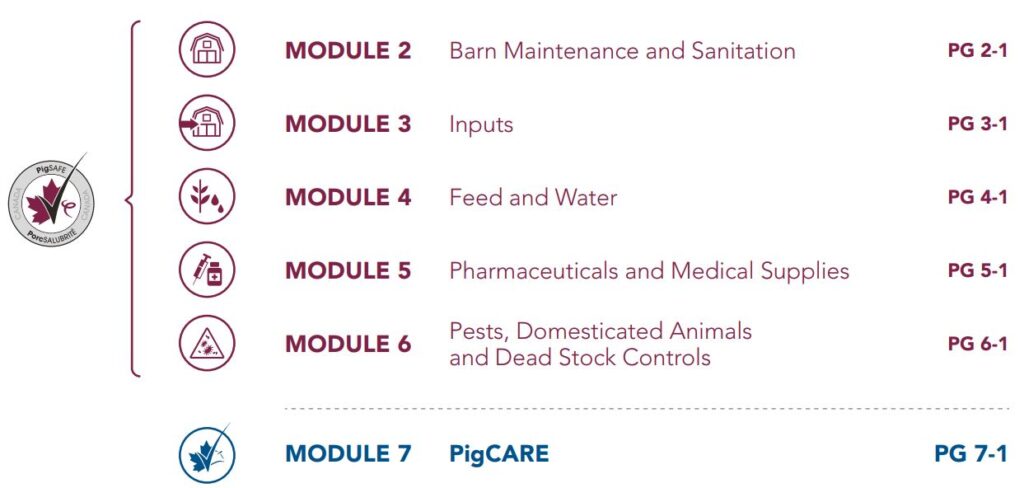
In its October 2020 report, CPC released statistics on national participation in the PigSAFE (food safety) and PigCARE (animal welfare) components of CPE. The program’s third pillar, PigTRACE (traceability), represents Canada’s ongoing system for tracking pig movements. Per the report, nearly 700 farms in Quebec and more than 300 in Ontario have been certified since the program took hold more than one year ago. In Manitoba and Saskatchewan, the program came online more recently, and those provinces count nearly 200 certified farms put together. In B.C. and the Maritimes, where few commercial operations exist, no farms are yet validated; however, that process is set to begin this year for producers in those provinces.
Western producers seek solutions
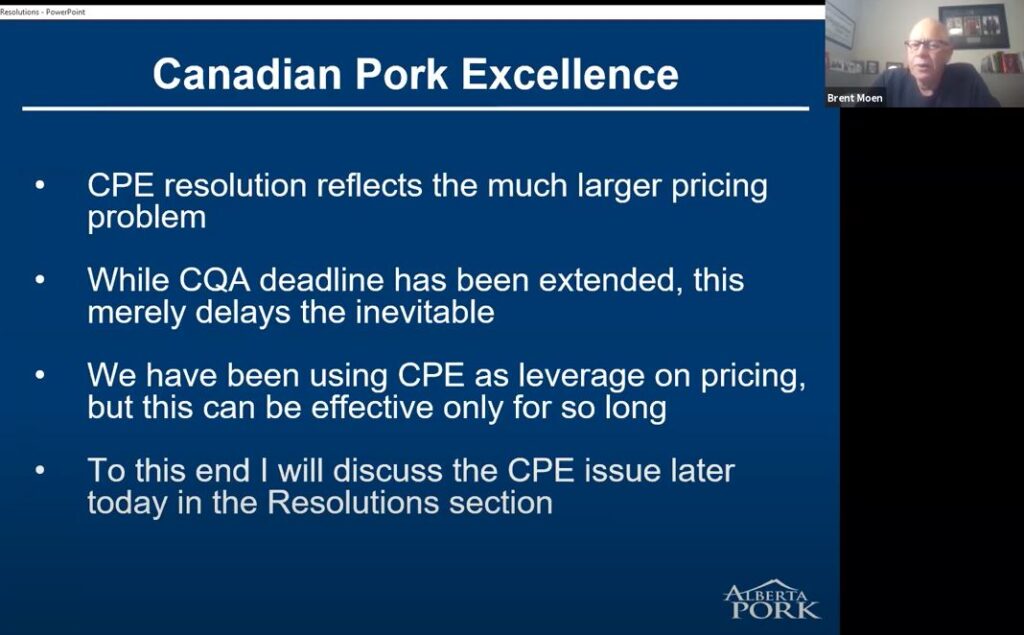
Brent Moen, Chair, Alberta Pork presents on CPE during Alberta Pork’s 2020 virtual AGM.
At Alberta Pork’s 2018 annual general meeting (AGM), re-affirmed at the organization’s 2019 AGM, a resolution was submitted to withhold CPE implementation in the province until producers could be promised $7 per head for all CPE-validated hogs. In Saskatchewan and Manitoba, similar resolutions had previously sought compensation, with those producer organizations ultimately moving to implement CPE by the end of 2019.
During Alberta Pork’s AGM in November 2020, the organization’s board of directors announced a decision to emphasize broader pricing solutions, rather than narrowly focusing on CPE compensation. After two years of trying, and with no movement from packers, the board felt it was more effective to transition its efforts this way.
In addition to addressing the practical realities of the situation, the Alberta Pork board of directors recognizes that producers want to continue doing their best to safeguard Canada’s food supply, while ensuring animal care remains a top priority.
“CPE is a tool that has tremendous value in the domestic and international market, and we, as producers, need to take control of this program, but Alberta Pork does not have jurisdiction to force all federal packers to pay for CPE,” said Brent Moen, Chair, Alberta Pork. “We view pricing and price data transparency as the real focus and the real problem to fix, and we will continue to work with our western and national counterparts to pursue a business case to support pricing reform, but the bottom line is that the CPE choice is up to individual producers to make.”
The rationale given for stopping work on the resolution is that, since first proposed, it has been rendered redundant, given a request made by CPC at the February 2020 meetings of both Canada Pork (formerly CPI) and the Canadian Meat Council (CMC), which receives its funding from Canadian packers, further processors and allied industries. CPC requested CMC’s pork processing members pay producers $2 per pig to recognize the increased efforts and costs producers invest into CPE validation.
CMC responded to the request by thanking producers for their work but clarified that its role is not to be “involved in price negotiations between producers and packers,” and that the request did not fall within the scope of CMC’s mandate.
Verified Canadian Pork earns a premium
In December 2019, CPC released its independently developed Made-in-Canada Hog Price Report, which took a comprehensive look at Canadian pork’s place in global markets. A notable standout is Japan, where pork of Canadian origin commands an observable premium over and above similar products of U.S. origin.
According to the report: “The Japanese premium distributed over the whole carcass would be calculated as the sum of the value of premiums on the Japanese market for each cut over the U.S. price, distinguishing fresh and frozen cuts, weighted by the share of each cut in the carcass cut-out and by the exposure to the Japanese market… The tentative estimate results in a Japanese premium of CAD $6.50 to $9 per 100 kilograms. The share of the producer is yet to be determined and should reflect the producers’ relative contribution to the effort resulting in that premium.”
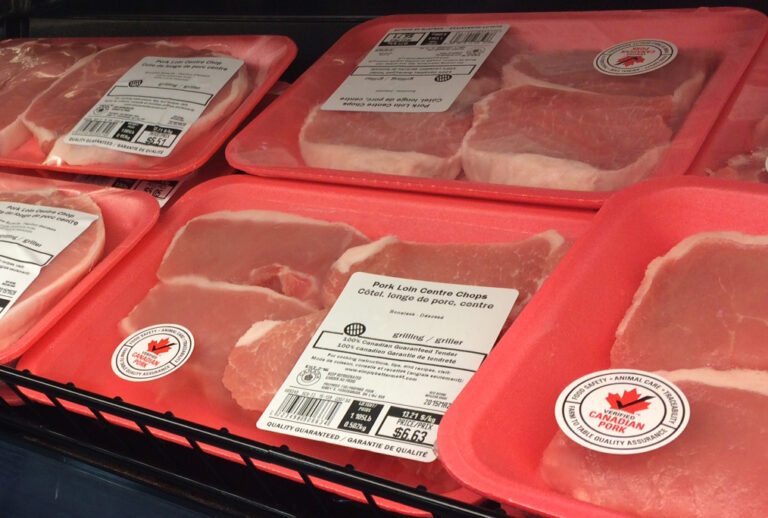
CPE is the on-farm program that creates the foundation for the Verified Canadian Pork (VCP) brand, which is used to differentiate Canadian pork products sold at the retail and food service level across Canada and abroad. For packers selling fresh or frozen product in Asia, rather than just primals sold to wholesalers, the VCP logo is an important visual identifier for consumers to distinguish pork of Canadian origin.
In July 2020, Costco Japan featured an online ‘Canada Fair’ to highlight its Canadian products, including pork, for its millions of members. The webpage prominently included images of vacuum-packed spareribs and ‘Katarosu’-style pork shoulder cuts from Olymel. In 2017, the company replaced its U.S. chilled pork with Canadian pork, resulting in a 300-tonne monthly increase in sales.
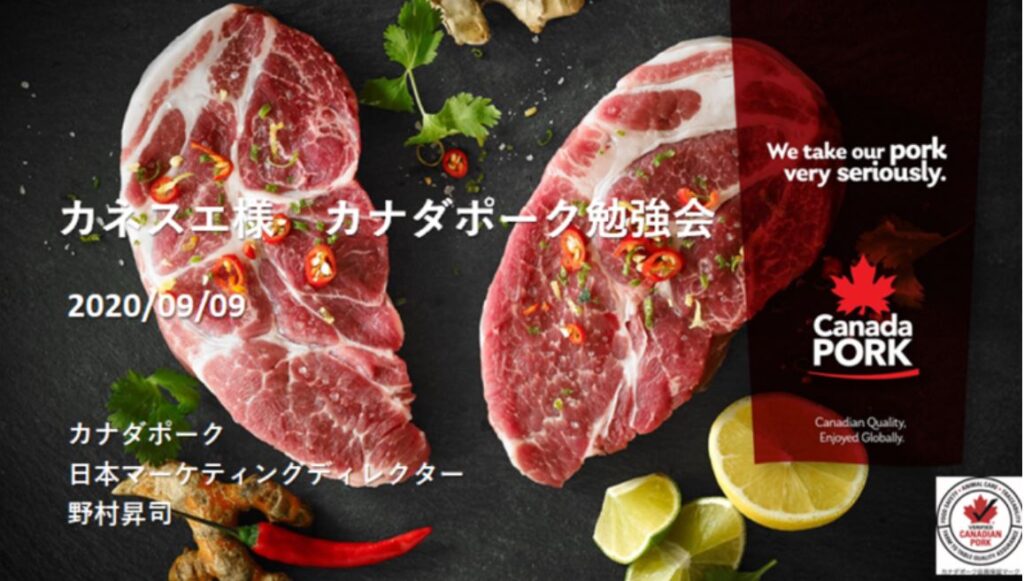
Presentation slide shown during a webinar hosted by Canada Pork in September for Japanese buyers, featuring VCP branding.
This past fall, Canada Pork and Canada Beef collaborated to present a series of webinars for Japanese, Korean, Chinese and Filipino in-market importers, distributors, purveyors and end-user customers to highlight measures taken by the Canadian red meat industry to address COVID-19. The VCP program, backed by CPE, is an important part of maintaining that confidence.
Without CPE representing quality assurance guarantees at the farm level, packers would be forced to retract their CPE-driven marketing claims and implement their own programs, which may not possess the same globally recognized significance of an independent national certification program. While some packers operate integrated production and processing businesses, the goodwill behind the VCP brand would risk losing its authoritative status among overseas buyers – potentially a major problem for the entire Canadian pork value chain.
Who owns the CPE and VCP brands?
In the latest edition of Canada Pork’s merchandising handbook, the VCP brand is described as a “unique partnership opportunity between Canadian farmers, processors and retail operators seeking to differentiate themselves in the Canadian marketplace.” In western Canada, where CPE faces its biggest challenges, more than 60 per cent of all pork produced is exported. For overseas customers, the VCP brand is perceived as being “owned by participating farmers and pork processors dedicated to offering premium-quality Canadian pork, traditionally raised and minimally processed under some of the highest food safety standards in the world.”
At least officially, the combined CPE and VCP value proposition would seem to be shared by both producers and packers, even if the disparity between pork profits earned by packers and hog prices paid to producers does not always reflect that reality. In the same Canada Pork handbook, however, details on CPE specifics are few, except for an inclusion of the logo on the front cover, along with a description of the outgoing CQA program inside. Until CPE is universally implemented across the provinces, the combined brand may be forced to continue inching forward a bit awkwardly.
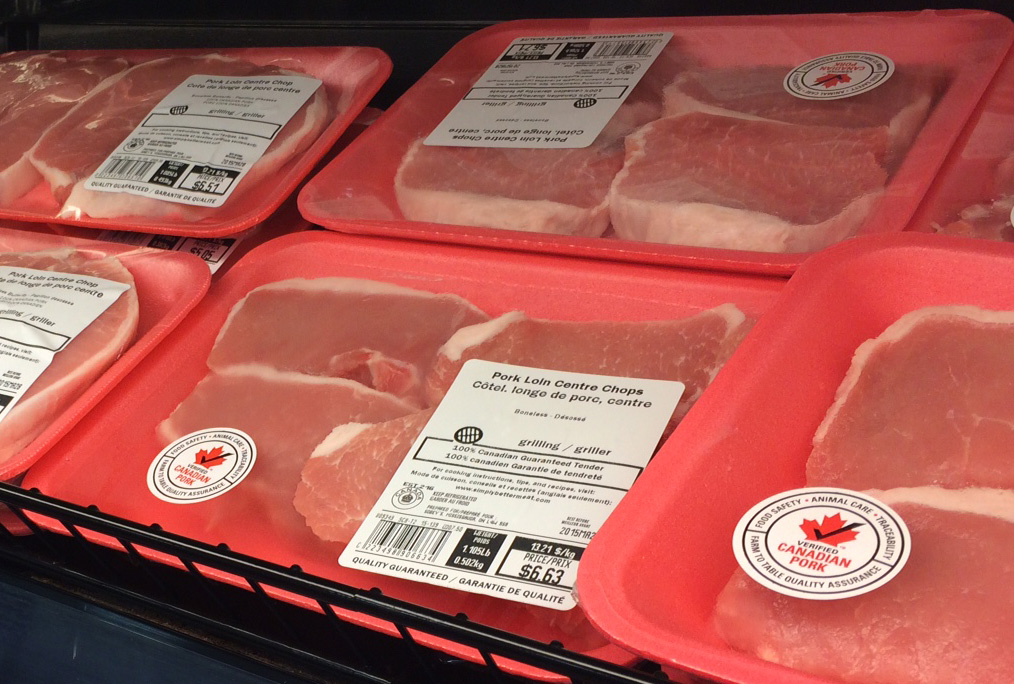
Not only overseas, but in Canada too, VCP branding is a tool that encourages public trust in CPE program guarantees.
As such, the recognizable slogan, “From farm to table quality assurance,” becomes obviously murky in some ways for consumers. Even among value chain partners, uncertainty persists when it comes to who formally owns the brand and what that entitles them to.
Discussion has taken place at the CPC board level regarding a possible ‘licensing’ agreement between producers and packers, which would require packers to pay a fee to use the VCP brand on their pork products. The fee could act as a royalty to producers, based on packers’ pork sales. If implemented, such an agreement could help alleviate tensions between the parties, but, like per-head compensation for CPE validation, it would not adequately address the elephant in the room: shared value.
Quality assurance underscores larger concerns
Beyond CPE compensation, broader shared value discussions have taken place regarding contracts and pricing structures, and new business risk management proposals are also contributing to enhancing the producer-packer relationship.
In the past year, in western Canada, HyLife and Olymel have made beneficial changes to their contracts when it comes to recognizing producers’ efforts to raise the pigs that generate high pork profits. And since last year, producers across Canada have looked at Quebec and the province’s arbitrated marketing agreement between producers and packers as inspiration for what could be: a system that experiences market ups and downs fairly between stakeholders.
Addressing the underlying reason behind producers’ request for CPE compensation is still front-and-centre. As time goes on, will more packers come on board? One could only hope, looking at the long-term sustainability of the Canadian pork industry.














U.S. Pork in Cold Storage Ten Year Low
Pork Commentary, February 1st, 2021
Jim Long, President-CEO, Genesus Inc.
At the end of December the USDA estimates U.S. Pork in cold storage was 408,361 (1,000 pounds) a year. A year ago it was 580,464. Down 30% and a ten year low.
In our opinion a sign of good pork demand, and bullish for the future lean hog prices.
U.S. Hog Slaughter (1,000 head)
January-December
The U.S. January-December 2020 numbers tell the story – more barrows and gilts and more sows to slaughter. The sow number of 3,321,000 up 309,000 year over year can be seen in the December Quarterly Hogs and Pigs Report with the 2020 breeding herd down 195,000 for the year.
December Breeding Herd (1,000 head)
Some Farmer Arithmetic
For what it’s worth analyzing the last 2 years of sow slaughter and breeding herd change we come with a sow slaughter on the 60,500 range per week average that would indicate a breeding herd staying about where it’s at. Above 60,500 it means liquidation. First 2 weeks of 2021 it has been 70,000 and 67,000.
Of note, last December-March the U.S.D.A. March 1 Hogs and Pigs Report indicated a Breeding Herd decline of 96,000 year over year. This year December was 18,000 higher sow slaughter than last year. All points to an indication of continued breeding herd liquidation.
It’s Farmer Arithmetic but it is what we figure.
The ASF Challenge
We have been doing business in Russia twelve years. Russia has been fighting ASF for over that length of time. Russia has massive land base and newer farms with good bio-security protocols. Still, they have not stopped ASF.
Recently, two large breaks – one near Moscow and other near Kursk, has led to a reported half a million pigs being killed including thousands of sows. To us this shows the challenge of stopping ASF. Russia’s structure should give it an advantage to do so.
When we compare Russia’s industry to China’s size and structure, the challenge to control ASF seems daunting. A person who works full time with China’s Swine Industry told us the other day “ASF is rampant still.” A big challenge.
When people look at China’s swine production increasing, we are not sure if the ASF equation is being factored in.
Currently in China, a commercial market hog is fetching over $600 U.S. a head. Certainly a sign of demand outstripping supply.
Other Observations
U.S. Pork Cut-outs closed Friday at 85.36₵ lb. Real strong price considering slaughter numbers of 2.658 million. Pork Cut-outs are 85.36₵ lb., Choice Beef Cut-outs $2.33 lb. Pork is a great deal cheaper relative to Beef. Maybe get better tasting Pork to compete with Beef might not be a bad idea? Why do people pay more for Beef? Taste! Doubt it’s because they want to just spend their money.
U.S. Chicken production continues to run lower than a year ago. About 1% lower egg sets, chicks placed, and slaughter. Chicken has for years had steady production increases. This slow down now means less meat available. Good for Pork price support.
U.S. cash early weans averaged $61.48 last week – 8 months ago they were $5.00. What a crazy business! All indications are there are lots of finishing spaces chasing less pigs available to fill them.
You can’t cut breeding herd and have major health breaks (PRRS) and not have fewer pigs. With sow herd liquidation continuing we expect even less supply in future. This is going to lead to even fewer market hogs.
We believe that current lean hog futures are underestimating supply-demand. We will not be surprised to see lean hogs over $1.00 a lb. this summer. With current feed prices we will all need it.